

Rideshare Accident Lawyer in Oceanside, CA: Full Guide
A step-by-step guide for Uber/Lyft accident victims in Oceanside on what to do after a rideshare crash, how insurance coverage works when a driver is on-app, and how Devoted Injury Lawyers handles rideshare claims from free 24/7 attorney evaluation through settlement or litigation. Covers common pitfalls like multiple insurance policies and delayed evidence collection.
Your driver's phone is mounted on the dash, the app shows three minutes to your destination, and then a pickup truck runs the light at Oceanside Boulevard. In the seconds after impact, most passengers have the same thought: whose insurance is even supposed to cover this? A rideshare crash isn't like a normal fender-bender. There are usually three or four insurance policies in play, and figuring out which one applies can decide whether your medical bills get paid quickly or sit unresolved for months.
This guide walks through what to do after an Uber or Lyft crash in Oceanside, how California's layered rideshare insurance rules actually work, and where most people lose ground on their claim without realizing it. If you're searching for a rideshare accident lawyer in Oceanside, California because you're not sure who's supposed to pay for your injuries, the steps below apply whether you were the passenger, the rideshare driver, a pedestrian, or the driver of another vehicle the rideshare car hit.
What Makes a Rideshare Accident Different From a Regular Car Crash
In a typical two-car crash, there's one obvious question: which driver was at fault? Rideshare crashes add a layer most people don't expect. Uber and Lyft carry different levels of insurance depending on what the driver's app was doing the moment of impact. Was the driver logged in and waiting for a ride request? En route to pick someone up? Already carrying a passenger? Each phase can trigger a different insurance policy, sometimes from the rideshare company, sometimes from the driver's own personal auto insurer.
That means a claim might involve the at-fault driver's personal insurer, the rideshare driver's insurer, and a commercial policy carried by Uber or Lyft, all at the same time. Insurance companies sometimes point at each other, arguing that a different policy should pay first. Meanwhile, your medical bills don't wait for that argument to get resolved.
1. Get Safe and Get Medical Care First
Before anything else, get yourself to safety and call 911 if anyone is hurt. Oceanside police or California Highway Patrol, depending on where the crash happened, need to respond and create an official report. Even if the wreck feels minor, ask for medical evaluation at the scene or get checked at an urgent care or emergency room within a day or two.
Adrenaline masks pain. Soft tissue injuries, concussions, and disc damage often show up hours or days later. Waiting to see a doctor doesn't just risk your health, it also gives an insurance adjuster a reason to argue your injuries weren't caused by the crash at all. A same-day or next-day medical record that ties your symptoms to the collision is one of the most valuable pieces of evidence you can create.
2. Document the Rideshare Trip Itself
This step gets skipped constantly, and it can quietly sink an otherwise strong claim. Before you close the app or forget about it, take screenshots of the trip details: your driver's name, the vehicle description and license plate, the pickup and drop-off addresses, and the trip status. If you were a passenger, your ride history in the app usually logs the exact time the trip started and ended, which helps establish whether the driver was "on a trip" when the crash happened. If you were hit by a rideshare vehicle and weren't a passenger, note the app or company logo on the car (Uber or Lyft), the driver's name if you can get it, and the license plate. That detail alone can determine which insurance tier applies to your claim.
- Screenshot the trip receipt and driver details before the app auto-clears them
- Save any in-app chat messages with the driver
- Write down the approximate time you requested the ride, when the driver arrived, and when the crash occurred
3. Collect Evidence at the Scene
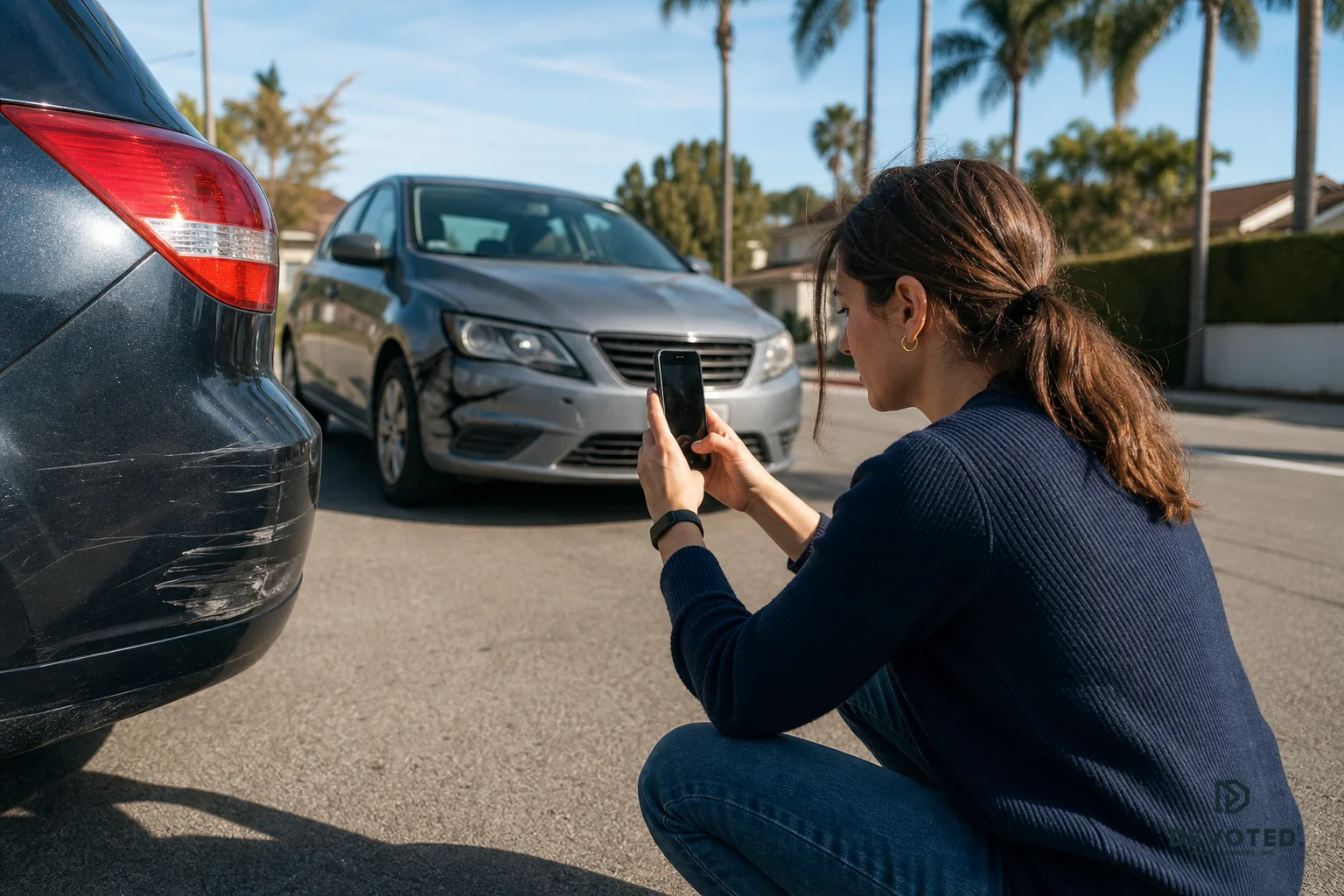
Evidence starts disappearing almost immediately after a crash. Skid marks fade, surveillance footage gets overwritten, and witnesses forget details or move away. If you're physically able, use your phone to photograph vehicle damage from multiple angles, the surrounding road and intersection, any visible injuries, and weather or lighting conditions.
Get names and phone numbers from anyone who saw what happened. Ask the responding officer for the report number before they leave, and request a copy once it's filed. If there are traffic cameras, nearby businesses with exterior surveillance, or a rideshare driver's own dashcam, that footage may only be retained for a short window, sometimes just days, before it's automatically deleted. This is one of the biggest reasons victims lose ground on rideshare claims: by the time they call a lawyer weeks later, the footage that would have proven fault is already gone.
4. Understand How Rideshare Insurance Coverage Works in California
California requires standard drivers to carry minimum liability coverage of $30,000 per person and $60,000 per accident. Rideshare companies operate under different rules because a driver's coverage shifts based on their app status at the moment of the crash. Generally, there are three recognized periods:
| App Status | What's Happening | Typical Coverage Available |
|---|---|---|
| Period 1 | App is on, driver is waiting for a ride request | Limited liability coverage through the rideshare company, often supplementing the driver's personal policy |
| Period 2 | Driver has accepted a request and is en route to pick up the rider | Higher liability coverage provided by the rideshare company's commercial policy |
| Period 3 | Passenger is in the vehicle, trip is underway | The highest coverage tier, generally including uninsured/underinsured motorist coverage for the passenger |
| App Off | Driver is not logged into the app at all | Only the driver's personal auto insurance policy applies, at standard California minimums |
These figures and structures can change, and every policy has its own limits and exclusions, so it's worth confirming current numbers directly with the insurers involved or through a licensed attorney reviewing your specific claim. The point of understanding this framework isn't to become an insurance expert overnight. It's to recognize that the app status at the moment of your crash likely determines which company you'll be negotiating with, and that detail is exactly what insurers sometimes try to dispute in their own favor.
5. Report the Crash the Right Way (And Watch What You Say)
Report the crash through the Uber or Lyft app as soon as it's safe to do so. This creates an internal record tied to your account and trip. Separately, make sure a police report gets filed, since this becomes an independent, official account of the crash that insurers and courts take seriously.
At some point, an insurance adjuster, possibly representing the rideshare company, the other driver, or both, may call you for a recorded statement. Be cautious here. You're not required to give a detailed recorded statement to another party's insurer, and casual comments like "I'm probably fine" or "it happened so fast, I'm not sure what happened" can be used later to minimize your claim. It's generally wise to speak with an attorney before giving any recorded statement to an insurance company that isn't your own.
6. Avoid Common Pitfalls in Rideshare Claims
Rideshare claims fail or get undervalued for a handful of predictable reasons. Knowing them ahead of time gives you a real advantage.

Multiple Insurance Policies Pointing at Each Other
When three or four policies could theoretically apply, insurers sometimes delay by arguing that a different policy should pay first. This back-and-forth can stretch out for months while your bills pile up.
Delayed Evidence Collection
As covered above, surveillance footage, dashcam recordings, and even the rideshare app's own trip data don't stay available forever. Waiting weeks to start gathering evidence often means it's simply gone.
Lowball Settlement Offers
An early settlement offer that arrives quickly can feel like a relief, especially with medical bills mounting. But an initial offer from an insurer is a starting position, not a final one, and it may not reflect the full value of your medical needs, lost income, or pain and suffering. Before accepting anything, it's worth having a licensed attorney review the offer against the actual scope of your injuries.
Government Claim Deadlines
If your rideshare crash involved a government-owned vehicle, like a city bus or a municipal truck, California law generally requires a formal government claim within six months of the incident, far shorter than the standard two-year window for most personal injury claims. Missing that shortened deadline can bar your claim entirely, so it's worth confirming early whether a government entity was involved.
7. Call an Attorney, Not Just an Intake Clerk
Rideshare claims involve layered insurance analysis that a general phone screening often isn't equipped to handle. When you call Devoted Injury Lawyers, you speak with a licensed California attorney directly rather than a rotating intake specialist, so questions about app status, coverage periods, and liability get answered by someone qualified to evaluate them from the first conversation.
During a free case evaluation, it's reasonable to ask questions like:
- Which insurance policy is likely to apply given my trip status at the time of the crash?
- What evidence should I try to preserve right now?
- Is there a government claim deadline that applies to my situation?
- How does your firm structure fees, and what happens if there's no recovery?
- Will I be working directly with an attorney throughout my case?
If you're still weighing your options, this related guide on what to expect from a car accident lawyer in Oceanside covers the general claims process in more depth, and the same core principles apply to rideshare cases.
How Devoted Injury Lawyers Handles a Rideshare Claim From Start to Finish

Devoted Injury Lawyers is a California professional law corporation founded in Oceanside in August 2024, led by founding partners Jeff Yates, Esq. and Derek Waldron, Esq., alongside litigation attorney Jeff Waldron, Esq. Together, the team brings more than 50 years of combined personal injury experience to California accident cases, including rideshare collisions across the state.
Here's generally how a rideshare claim moves through the firm:
- Free 24/7 attorney evaluation. Phone lines are staffed around the clock. Once you call, an attorney reviews the basic facts of your potential claim. If it's a matter the firm can take on, you receive a free consultation directly from a licensed attorney, not an intake clerk. If the firm can't assist, the team will try to point you toward other resources that may help.
- Investigation and evidence preservation. This includes securing the rideshare trip data, requesting surveillance or dashcam footage before it's deleted, obtaining the police report, and gathering medical records tied to your injuries.
- Insurance negotiation across multiple policies. Because rideshare claims often involve more than one insurer, the firm works to identify which policy or policies apply and negotiates directly with the responsible parties rather than letting the case stall in back-and-forth disputes.
- Litigation, if necessary. Not every case settles at the negotiation stage. When an insurer won't offer a fair resolution, the firm prepares cases for litigation in California courts.
- Contingency-fee representation. Personal injury matters are handled with no attorney fee unless the client recovers compensation.
The firm also offers bilingual service in English and Spanish (Hablamos Español), with Derek Waldron, Esq. and Jeff Waldron, Esq. both fluent in Spanish, plus a mobile app for real-time case status updates so clients aren't left wondering what's happening with their claim. You can review the team's backgrounds on the Meet the Team page, or see examples of past case outcomes on the firm's results page.
For a deeper look at fee structures generally, this guide on how much a personal injury lawyer costs breaks down contingency arrangements in plain language.
Who Can Be Held Liable in an Oceanside Rideshare Accident?
Liability in a rideshare crash depends heavily on the facts, but several parties are commonly evaluated:
- The rideshare driver, if their own negligence, like distracted driving or a traffic violation, caused or contributed to the crash
- The other driver involved, if a separate vehicle caused the collision
- Uber or Lyft's insurer, depending on the driver's app status at the time (see the coverage table above)
- The vehicle owner, in cases where the driver doesn't own the car they were using
Passengers injured during a trip generally have a more direct path to the highest tier of rideshare coverage, since Period 3 typically includes stronger liability limits and uninsured/underinsured motorist protection. Third parties, like pedestrians, cyclists, or occupants of another vehicle struck by a rideshare car, may need to pursue a claim against whichever policy applies based on the driver's app status, which is exactly why documenting that status matters so much in the first hours after a crash.
Frequently Asked Questions About Rideshare Accident Claims in Oceanside
Can I sue Uber or Lyft directly?
Generally, claims are directed at the applicable insurance policy rather than the rideshare company itself, though this depends on the specific facts of the crash and the driver's employment classification. An attorney can review your situation to determine the appropriate path.
What if I was a pedestrian or in another car that a rideshare driver hit?
You may still have a claim against the applicable insurance coverage, whether that's the rideshare company's policy or the driver's personal insurance, depending on the app status at the time of the crash. Third-party victims often face more complexity identifying which policy applies, which is where legal help tends to matter most.
How long do I have to file a claim in California?
Most personal injury claims in California generally must be filed within two years of the incident, though shorter deadlines can apply if a government entity or vehicle was involved. For more detail, see this guide to California's personal injury statute of limitations.
What percentage do lawyers take from a settlement?
Contingency fee percentages vary by firm and case, and it's reasonable to ask about the specific structure during your free consultation. Personal injury matters at Devoted Injury Lawyers are handled on a contingency-fee basis, meaning there's no attorney fee unless you recover compensation.
Do I need a lawyer if the rideshare company's insurer already offered me a settlement?
It's worth having any offer reviewed before you accept it. Initial settlement offers don't always reflect the full scope of medical costs, lost wages, or pain and suffering you may be entitled to, and once you accept and sign a release, you typically can't go back for more later.
Get Your Rideshare Claim Moving in the Right Direction
A rideshare crash puts you in the middle of overlapping insurance policies at exactly the moment you have the least energy to sort through them. The steps above, getting medical care, documenting the trip, preserving evidence, and understanding which coverage period applies, give you a real foundation. But the analysis of which policy pays, and how much your claim is actually worth, is where a licensed attorney's review makes the difference between a fair resolution and a rushed one.
Devoted Injury Lawyers offers a free consultation directly with a California-licensed attorney, call us anytime, with service in English and Spanish. If you were hurt in an Oceanside rideshare accident, whether as a passenger, a driver, or someone hit by a rideshare vehicle, you can submit your case details or call (888) 760-2529 anytime to have your situation reviewed. If your vehicle needs repairs after the crash, you can also find reliable auto body shops near you while your claim moves forward.
Disclaimer: The information provided on DevotedInjuryLawyers.com is for general informational purposes only and does not constitute legal advice.
Jeff Yates, Esq.
CA Bar #332659 · Admitted 2021 · PI since 2011
Jeff is the founding partner of Devoted Injury Lawyers. He has worked in California personal injury since 2011 and holds a Justia 10.0 rating. He is the default legal reviewer for Devoted blog content.
Read Jeff's full bio →Keep going.
One call.
One team.
One less thing
to worry about.
Get a fast case evaluation. Free 24/7 consultation. No fee unless we win. Hablamos Español.