

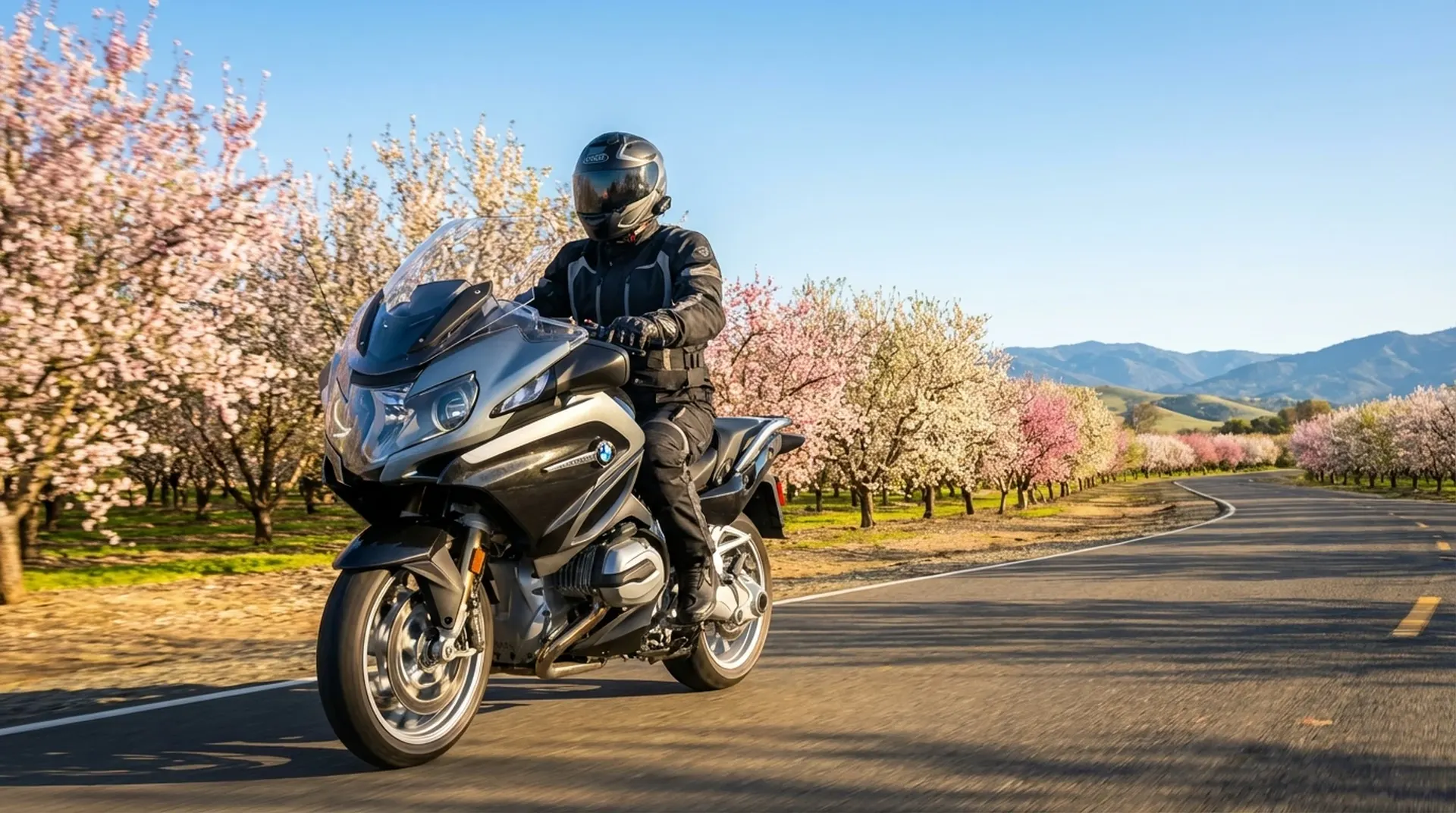
Top 5 Tips for Safe Spring Motorcycle Riding in Central Valley
Spring in California’s Central Valley is something special. The tule fog lifts, the orchards explode into pink and white blossoms, and the temperatures finally hit that sweet spot, perfect for pulling the bike out of the garage.

Spring in California’s Central Valley is something special. The tule fog lifts, the orchards explode into pink and white blossoms, and the temperatures finally hit that sweet spot, perfect for pulling the bike out of the garage. After a winter of rain and cold, thousands of riders from Fresno to Bakersfield are eager to hit the asphalt.
But early spring riding comes with its own set of risks. The roads have changed since you last rode them, and drivers aren't quite used to seeing motorcyclists weaving through traffic again. At Devoted Injury Lawyers, we see an uptick in motorcycle accident cases each March and April. While we are usually here to fight for your rights after an accident, our first hope is that you rarely need to call us.
Before you cruise down Highway 99 or take the scenic route through the foothills, review these five essential safety tips designed specifically for Central Valley riders.
1. Inspect Your Bike Thoroughly After Winter Storage
It’s tempting to just jump on and go, especially when that first warm Saturday hits. However, a motorcycle that has been sitting dormant for months can be a hidden danger. Mechanical failure is a significant cause of solo motorcycle accidents, and spring is prime time for these issues to surface.
Check Your Tires First
Central Valley heat is tough on rubber, but winter cold can be just as damaging. Tires lose pressure over time. Riding on under-inflated tires affects handling and braking distance. Check for:
- Cracks or dry rot: Look closely at the sidewalls.
- Flat spots: Sitting in one position for months can deform the tire.
- Tread depth: Ensure you have enough grip for potential spring showers.
Fluids and Brakes
Old fuel can gum up your system, and brake fluid absorbs moisture over time, reducing braking efficiency. Check your oil levels, coolant, and brake fluid. Give your brakes a firm squeeze before you even turn the key. If they feel spongy, you need to bleed them before hitting the road.
The Motorcycle Safety Foundation (MSF) offers excellent checklists (T-CLOCS) for pre-ride inspections that each rider should memorize.
How long do I have to file a motorcycle accident claim in California?
For most California personal injury claims, including this category, the statute of limitations is two years from the date of the injury under CCP § 335.1. Government claims (against a city, county, or state agency) have a much shorter six-month window under Gov. Code § 911.2 - so do not wait to call.
2. Watch Out for "Green" Road Conditions
In the Central Valley, "spring cleaning" applies to the roads too, but nature does it in a messy way. Winter storms and agricultural activity leave debris that can be lethal for two-wheeled vehicles.
Potholes and Cracks
Winter rains in the Valley often lead to deteriorating road surfaces. Water seeps into cracks, expands, and breaks apart the asphalt. What was a smooth ride in October might be a pothole minefield in March. Scan the road surface constantly, not just traffic.
Gravel and Agricultural Debris
This is unique to our region. As farming activity ramps up for the season, trucks drag mud, gravel, and loose dirt onto rural highways and county roads. This debris acts like marbles under your tires, especially in corners. Be hyper-vigilant near orchard entrances and field turnouts.
According to the National Highway Traffic Safety Administration (NHTSA), road hazards are a leading cause of motorcycle instability. Slow down when approaching blind corners in rural areas where debris is most likely to accumulate.
3. Retrain Your Brain (and Your Reflexes)
Even seasoned riders get rusty. If you haven't ridden since November, your skills aren't as sharp as they were at the end of the last season. Muscle memory fades faster than we like to admit.
Start with a Shorter Ride
Don't make your first ride of the season a 200-mile trek to the coast. Start with a short, local loop to get the feel of the clutch, the brakes, and the weight of the bike again.
Practice Defensive Maneuvers
Find an empty parking lot and practice a few emergency stops and swerves. Remind your body how it feels to brake hard without locking up. This is crucial because, in the first few weeks of spring, car drivers are also "rusty" at seeing you. They haven't been looking for a single headlight in their mirrors for months.
Refresh Your Lane Positioning
Lane positioning is your primary defense against invisible drivers. Stay out of blind spots. In the Central Valley, where long stretches of straight highway can induce "highway hypnosis" in car drivers, make yourself visible. Move within your lane to catch the eye of the driver ahead of you.
4. Prepare for Unpredictable Valley Weather
We many know the saying: "If you don't like the weather, wait five minutes." Spring in the Central Valley is beautiful, but it is volatile. You might start your ride in glorious sunshine and hit a squall near Modesto an hour later.
Dress for the Slide and the Cold
It might be 70 degrees at noon, but it can drop to the 50s quickly as the sun sets or if a storm front moves in. Hypothermia-or even just being cold and stiff-slows your reaction times significantly.
- Layer up: Wear moisture-wicking base layers.
- Waterproof gear: Keep a rain suit in your saddlebag. Spring showers make oil-slicked roads incredibly slippery, especially after a dry spell.
- Visor check: Ensure you have a clear visor for low-light conditions if you get caught out later than expected.
Wind Gusts
Spring winds in the Valley can be fierce, particularly on the I-5 corridor. Sudden crosswinds can push a motorcycle across a lane instantly. When riding in high winds, keep a loose grip on the bars (don't fight the bike too hard) and give yourself extra buffer space from other vehicles.
5. Defensive Riding Against Distracted Drivers
Distracted driving is an epidemic, and unfortunately, motorcyclists pay the highest price. As people get out more in the spring, traffic density increases, and so does the number of distracted drivers.
The "Left Turn" Danger
The most common motorcycle accident involves a car turning left in front of a rider. This happens frequently at intersections in busy cities like Fresno and Stockton. Drivers look, but their brain doesn't register the smaller profile of a motorcycle.
- Assume they don't see you. Even if you make eye contact.
- Cover your brakes. Be ready to stop instantly at each intersection.
- Watch the wheels. Look at the car's front wheels; they often give away movement before the car actually moves forward.
Agricultural Machinery
Spring means tractors and harvesters are moving between fields. These vehicles move slowly, make wide turns, and often lack bright turn signals. Be patient. Rarely try to overtake a piece of farm equipment unless you are 100% certain the operator sees you and isn't about to turn left into a field.
For more statistics on motorcycle safety and accident prevention, the Insurance Institute for Highway Safety (IIHS) provides detailed data that highlights why defensive riding is non-negotiable.
Why Legal Support Matters for Motorcyclists
We hope this spring riding season gives you little but open roads and great memories. However, the reality is that accidents happen, often due to the negligence of others.
At Devoted Injury Lawyers, we understand the unique bias motorcyclists face. Insurance companies often try to pin the blame on the rider, assuming you were speeding or being reckless simply because you were on a bike. We know the Central Valley roads, we know the laws, and we know how to reconstruct accidents to prove who was really at fault.
If you or a loved one is injured in a motorcycle accident this spring, you need a team that respects your right to ride and knows how to protect your future.
Ride Safe, Ride Smart
The freedom of two wheels is unmatched, but it requires respect-respect for the machine, the road, and the conditions. By inspecting your bike, watching for debris, dusting off your skills, preparing for weather, and riding defensively, you can ensure this spring season is one of your best yet.
Have you been injured in a motorcycle accident in the Central Valley? Don't let insurance companies dictate your recovery. Contact Devoted Injury Lawyers today for a free consultation. We are dedicated to fighting for the compensation you deserve.
What should I do today?
Take three steps right now: (1) get any needed medical care and follow through with each visit, (2) photograph injuries, vehicles, scene, and any property damage before it changes, and (3) call us before talking to the at-fault insurer. Call (888) 760-2LAW for a free, no-pressure consultation, or visit our contact page to send the details. We answer 24/7, work on contingency, and will tell you straight whether you might have a case. Past results do not guarantee a similar outcome.
Disclaimer: The information provided on DevotedInjuryLawyers.com is for general informational purposes only and does not constitute legal advice.
Jeff Yates, Esq.
CA Bar #332659 · Admitted 2021 · PI since 2011
Jeff is the founding partner of Devoted Injury Lawyers. He has worked in California personal injury since 2011 and holds a Justia 10.0 rating. He is the default legal reviewer for Devoted blog content.
Read Jeff's full bio →One call.
One team.
One less thing
to worry about.
Get a fast case evaluation. Free 24/7 consultation. No fee unless we win. Hablamos Español.