

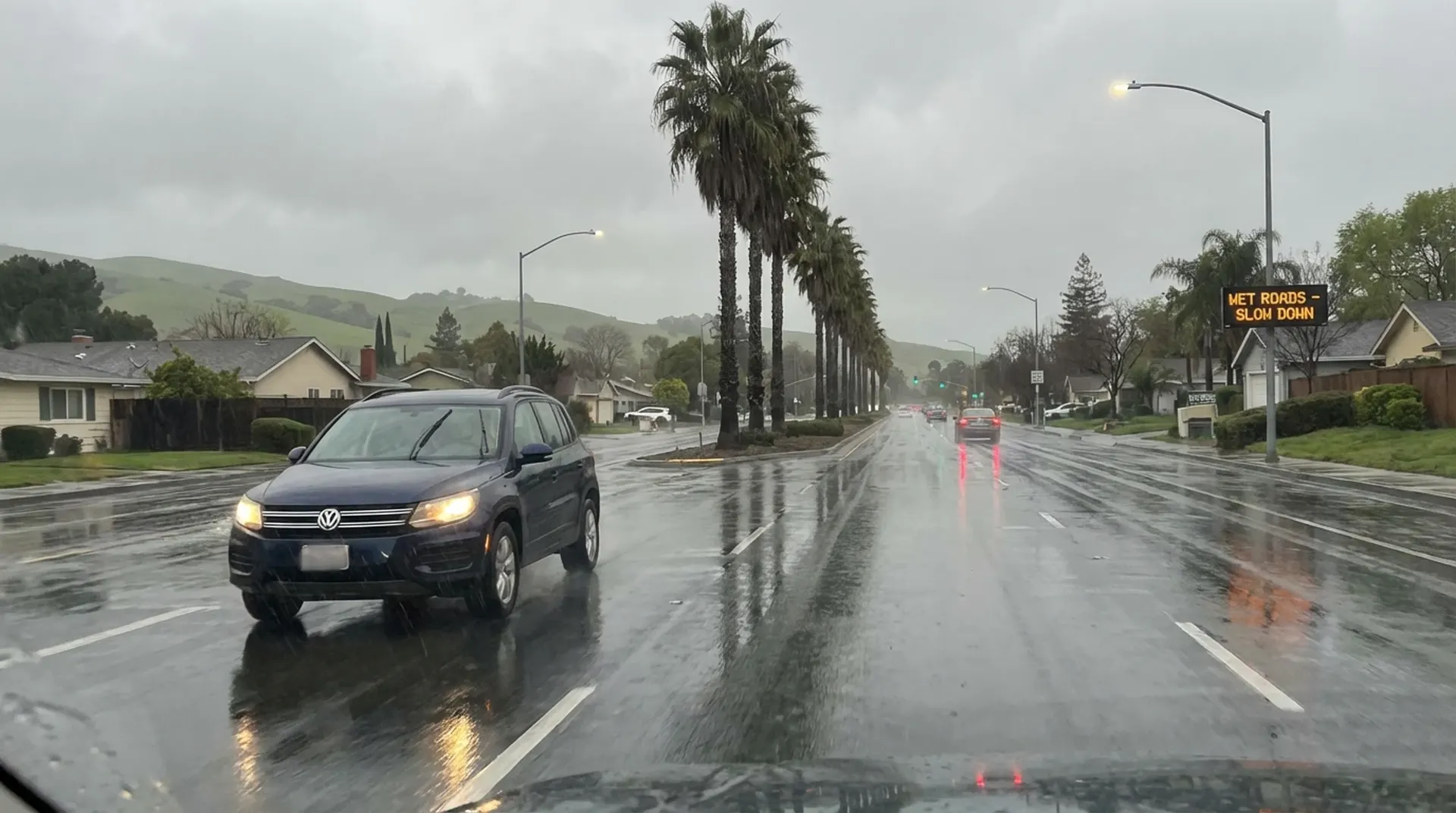
How to Avoid Hydroplaning on Wet Roads in Fremont: Safety Tips for Spring Rainstorms
Driving in Fremont during the rainy season brings unique challenges. While we often enjoy sunny California weather, spring storms can transform familiar roads like I-880 or Mission Boulevard into hazardous slip-and-slides.

Driving in Fremont during the rainy season brings unique challenges. While we often enjoy sunny California weather, spring storms can transform familiar roads like I-880 or Mission Boulevard into hazardous slip-and-slides. One of the most terrifying experiences a driver can face is hydroplaning, losing control of your vehicle as it skims across a layer of water.
At Devoted Injury Lawyers, we see the aftermath of weather-related accidents far too often. Many of these collisions are largely preventable with the right knowledge and preparation. This guide will help you understand why hydroplaning happens, how to prevent it, and what to do if you find yourself sliding on a wet road.
What is Hydroplaning and Why Does it Happen?
Hydroplaning, also known as aquaplaning, occurs when your tires lose contact with the road surface due to a layer of water. Essentially, your car is no longer driving on asphalt; it is surfing on a thin film of water. When this happens, you lose steering and braking control, turning your vehicle into an unguided projectile.
This typically happens when water accumulates on the road faster than your tire treads can channel it away. It doesn't require a flood; even a small amount of standing water mixed with oil residue, common on Fremont roads after a dry spell, can be enough to cause a loss of traction.
Factors That Increase Hydroplaning Risk
Several variables contribute to the likelihood of hydroplaning:
- Speed: The faster you drive, the harder it is for your tires to scatter water.
- Tire Tread Depth: Worn tires have less capability to channel water away.
- Water Depth: Deeper water poses a higher risk.
- Vehicle Weight: Lighter vehicles are more prone to hydroplaning than heavy trucks.
- Road Conditions: Poor drainage on older sections of Fremont’s roadways can create dangerous pooling.
According to the Federal Highway Administration (FHWA), there are more than 6,035,000 vehicle crashes each year on average. Approximately 12 percent of these accidents, nearly 745,000, are weather-related.
How long do I have to file a car accident claim in California?
For most California personal injury claims, including this category, the statute of limitations is two years from the date of the injury under CCP § 335.1. Government claims (against a city, county, or state agency) have a much shorter six-month window under Gov. Code § 911.2 - so do not wait to call.
Essential Maintenance to prevent Hydroplaning
Preventing an accident starts before you even turn the key. Your vehicle’s condition is your first line of defense against wet roads.
Check Your Tires Regularly
Your tires are a leading contact point between your car and the road. If the tread is worn down, that contact is compromised. In California, tires are considered legally bald if they have less than 1/32 inch of tread depth, but for wet weather safety, experts recommend much more.
A simple way to check is the "penny test." Insert a penny into your tire's tread groove with Lincoln's head upside down. If you can see many of Lincoln's head, your tread depth is less than 2/32 inch and it's time to replace your tires.
Maintain Proper Tire Pressure
Under-inflated tires have a larger surface area, which might sound good for grip, but actually increases the risk of hydroplaning because the center of the tire can bow inward, trapping water rather than channeling it out. Check your driver’s side door jamb for the manufacturer's recommended PSI and check it monthly.
Ensure Your Wipers are Streak-Free
Visibility is crucial. If you may not see a puddle ahead, you may not slow down for it. The fierce sun in Fremont can dry out wiper blades quickly, causing them to crack. Replace your wiper blades each 6 to 12 months to ensure clear vision during spring downpours.
Driving Tactics for Fremont’s Wet Roads
Even the best-maintained car needs a cautious driver. Adjusting your driving habits during rain is non-negotiable for safety.
Slow Down
This is the single most effective way to avoid hydroplaning. Most hydroplaning occurs at speeds above 35 mph. On highways like I-680 or 880, traffic often moves fast even in the rain. Resist the urge to keep up with aggressive drivers. Reducing your speed by just 5-10 mph significantly helps your tires maintain contact with the pavement.
Avoid Cruise Control
Rarely use cruise control in the rain. If your car begins to hydroplane while cruise control is on, the system might interpret the loss of traction as a slowdown and attempt to accelerate, making the loss of control even worse. Keeping your foot on the pedal allows you to feel the road and react instantly.
Follow the Tracks
When driving on multi-lane roads, try to drive in the tire tracks left by the vehicle ahead of you. The car in front has already displaced some of the water, giving your tires a slightly drier path to grip.
Avoid Hard Braking and Sharp Turns
Sudden movements are the enemy of traction. Brake gently and early. Turn the steering wheel smoothly. Jerky motions can break whatever fragile grip your tires have on a wet surface.
What to Do If You Hydroplane
Despite your best efforts, you might hit a patch of standing water and feel the steering wheel go light. It’s a terrifying sensation, but panic is your worst enemy. Here is how to handle it:
- Do Not Slam on the Brakes: Braking hard will lock your wheels (unless you have ABS, but even then, it can cause a skid) and guarantee a loss of control.
- Ease Off the Gas: Gently lift your foot off the accelerator. This transfers weight to the front of the car and helps tires regain contact.
- Steer Into the Skid: If your back wheels are sliding left, steer left. If they slide right, steer right. This sounds counterintuitive, but it helps align your wheels with the direction of travel.
- Wait for Traction: As your speed drops, you should feel the tires reconnect with the asphalt. Typically then should you gently apply brakes or steer toward safety.
When Accidents Happen: Your Rights in Fremont
Sometimes, you can do much right and still be involved in an accident due to another driver's negligence. Perhaps another driver was speeding on wet roads, failed to maintain their tires, or was driving aggressively despite the conditions.
In California, drivers have a duty of care to operate their vehicles safely given the current road conditions, not just the posted speed limit. This means that driving 65 mph in a 65 mph zone during a heavy storm can still be considered negligent if it was unsafe to do so.
If you are injured in a hydroplaning accident caused by someone else, you may be entitled to compensation for your medical bills, lost wages, and vehicle damage. At Devoted Injury Lawyers, we understand the nuances of weather-related accident claims. We investigate factors like tire maintenance, speed relative to conditions, and road design to build strong cases for our clients.
Stay Safe This Spring
Spring rainstorms are vital for our environment, but they demand respect from drivers. By maintaining your vehicle and adjusting your driving habits, you can significantly reduce the risk of hydroplaning.
Remember, arriving five minutes late is usually better than not arriving at many. Stay safe on Fremont roads, and know that Devoted Injury Lawyers is here to support our community if the unexpected happens.
What should I do today?
Take three steps right now: (1) get any needed medical care and follow through with each visit, (2) photograph injuries, vehicles, scene, and any property damage before it changes, and (3) call us before talking to the at-fault insurer. Call (888) 760-2LAW for a free, no-pressure consultation, or visit our contact page to send the details. We answer 24/7, work on contingency, and will tell you straight whether you might have a case. Past results do not guarantee a similar outcome.
Disclaimer: The information provided on DevotedInjuryLawyers.com is for general informational purposes only and does not constitute legal advice.
Jeff Yates, Esq.
CA Bar #332659 · Admitted 2021 · PI since 2011
Jeff is the founding partner of Devoted Injury Lawyers. He has worked in California personal injury since 2011 and holds a Justia 10.0 rating. He is the default legal reviewer for Devoted blog content.
Read Jeff's full bio →Keep going.
One call.
One team.
One less thing
to worry about.
Get a fast case evaluation. Free 24/7 consultation. No fee unless we win. Hablamos Español.