

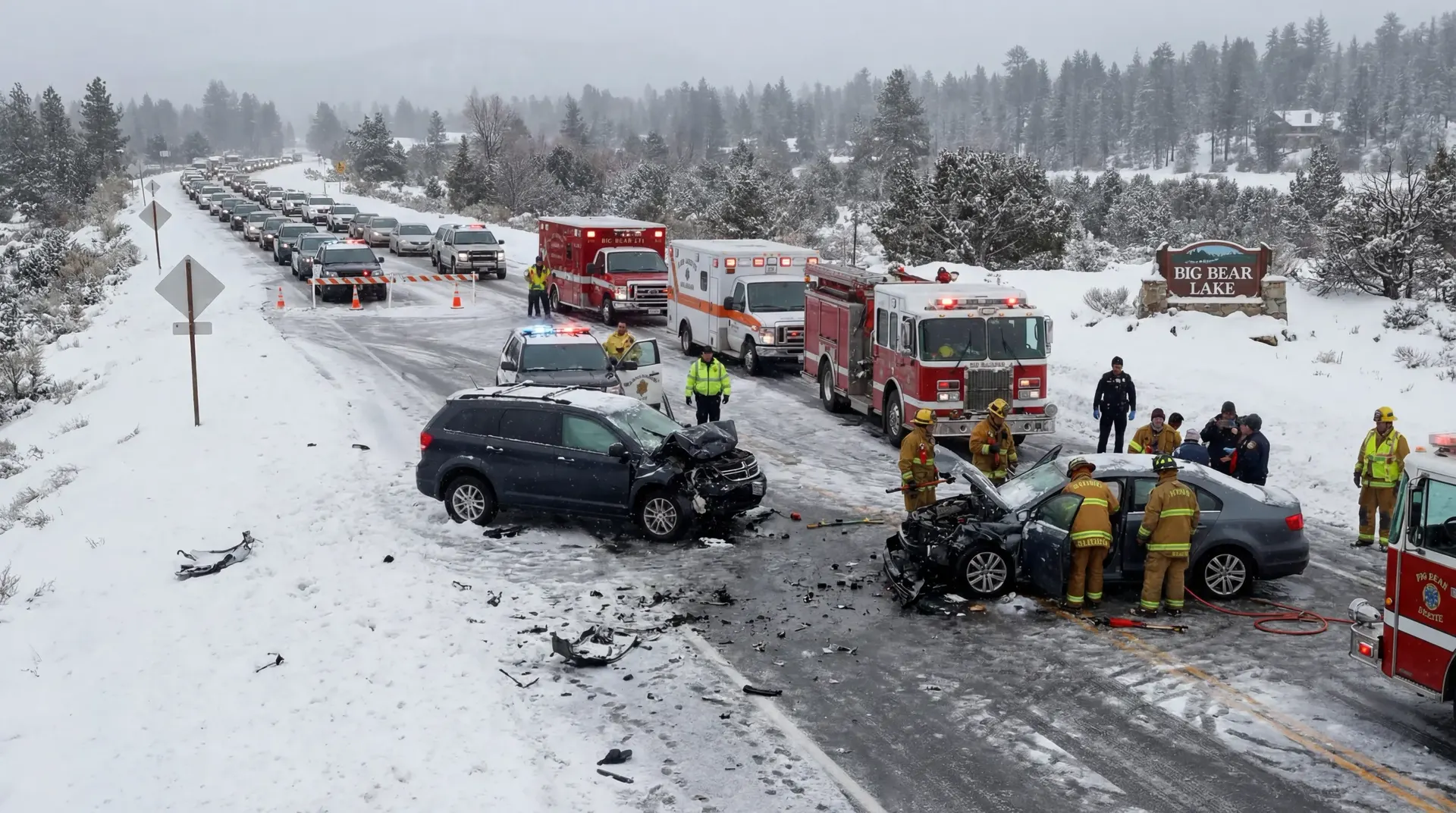
Top 5 Winter Driving Hazards in Big Bear, CA
Big Bear Lake is a stunning winter destination. The snow-capped mountains and crisp air draw thousands of visitors from Southern California each year.

Big Bear Lake is a stunning winter destination. The snow-capped mountains and crisp air draw thousands of visitors from Southern California each year. But that scenic drive up the mountain can turn treacherous in a heartbeat. Winter weather in the San Bernardino Mountains brings unique challenges that catch many drivers off guard.
If you are planning a trip to the snow, preparation is your best defense. We see too many preventable accidents happen because drivers underestimate the mountain conditions. At Devoted Injury Lawyers, we want you to enjoy your trip safely. But if the worst happens, we are here to help you navigate the aftermath.
Here are the top 5 winter driving hazards you need to watch for in Big Bear, CA, and how to handle them.
1. Black Ice: The Invisible Threat
This is arguably the most dangerous hazard on mountain roads. Black ice isn't actually black; it is a thin, transparent layer of ice that forms on the roadway, blending in perfectly with the asphalt. You often may not see it until you are already sliding.
Where Black Ice Forms
Black ice typically forms on bridges, overpasses, and shaded areas of the road where the sun doesn't hit directly. In Big Bear, spots along Highway 18 and Highway 38 that are tucked against the mountainside are prime locations for this hazard.
How to Drive Safely
- Don't trust your eyes: Just because the road looks wet doesn't mean it isn't icy.
- Coast, don't brake: If you hit ice, take your foot off the gas. Do not slam on the brakes, as this will lock your wheels and cause a spin.
- Steer gently: Turn your wheel slightly in the direction of the skid to regain control.
According to the U.S. Department of Transportation, over 116,000 people are injured in vehicle crashes on snowy, slushy, or icy pavement annually. Understanding how to react to black ice is critical for survival.
How long do I have to sue after a pedestrian accident in California?
For most California personal injury claims, including this category, the statute of limitations is two years from the date of the injury under CCP § 335.1. Government claims (against a city, county, or state agency) have a much shorter six-month window under Gov. Code § 911.2 - so do not wait to call.
2. Dense Mountain Fog
As you climb in elevation, you are literally driving into the clouds. Visibility can drop to near zero in a matter of seconds. This is common along the "Rim of the World" highway leading up to Big Bear.
The Danger of Fog
Fog distorts your perception of speed and distance. You might think the car ahead is further away than it is, or you might not see a stopped vehicle until it is too late.
Actionable Advice
- Use low beams: High beams reflect off the water droplets in the fog, creating a "white wall" effect that makes visibility worse.
- Follow the lines: Use the white line on the right side of the road (the fog line) as a guide. Don't hug the center line, as oncoming traffic might drift into your lane.
- Increase following distance: Give yourself at least double the normal braking distance.
3. Falling Rocks and Debris
Winter storms don't just affect the road surface; they destabilize the mountainside itself. The freeze-thaw cycle-where water seeps into cracks, freezes, expands, and then melts-loosens rocks and boulders.
Why It's a Hazard
A rockslide can happen instantly. Even small rocks can shatter a windshield or force a driver to swerve into oncoming traffic. After a heavy rain or snowstorm, the risk of debris falling onto Highway 330 or Highway 18 increases significantly.
What to Do
- Stay alert: Keep scanning the road ahead, not just the car in front of you.
- Avoid swerving violently: If a small rock is in your path and you may not safely avoid it, it is often safer to drive over it (if clearance allows) or brake in a straight line rather than swerving into the other lane or off the cliffside.
4. Chain Control Checkpoints and Installation
While chains are a safety tool, the process of using them creates its own hazards. Chain control areas are often chaotic, with people walking on the roadside, cars merging unpredictably, and drivers struggling with installation in freezing conditions.
The Risks
- Pedestrians: Many accidents happen when drivers are outside their vehicles installing chains and get struck by sliding cars.
- Improper Installation: Loose chains can damage your vehicle's brake lines or wheel wells, leading to sudden mechanical failure.
Expert Tip
Practice installing your chains at home in your driveway before you head up the mountain. It is much easier to learn on dry pavement than on the side of a snowy highway with frozen fingers. Usually carry a flashlight and a waterproof mat to kneel on.
Check the Caltrans QuickMap for real-time chain control requirements before you leave.
5. Other Drivers
Sometimes the biggest hazard isn't the weather-it's the people around you. In Big Bear, you have a mix of experienced locals and tourists who have rarely driven in snow before.
Common Driver Errors
- Tailgating: Following too closely on slick roads reduces reaction time to zero.
- Speeding: 4-wheel drive helps you go, but it does not help you stop. Many SUV drivers overestimate their braking ability on snow.
- Stopping in unsafe areas: Tourists often stop in the middle of the road or on narrow shoulders to take photos or play in the snow, creating dangerous obstacles.
Defensive Driving Is Key
Assume other drivers will make mistakes. Leave plenty of space, stay patient, and rarely feel pressured to drive faster than you are comfortable with. Use turnouts to let faster traffic pass so you can focus on the road without distraction.
How Devoted Injury Lawyers Can Help
Even the most cautious drivers can fall victim to someone else's negligence. If you are injured in a winter driving accident in Big Bear or the surrounding mountain roads, you need an advocate who understands these specific hazards.
At Devoted Injury Lawyers, we specialize in complex accident cases involving:
- Multi-vehicle pile-ups on icy roads
- Collisions caused by improper chain usage
- Accidents involving government negligence (such as lack of road maintenance)
- Uninsured or underinsured motorist claims
We dig deep into the evidence, from weather reports to skid mark analysis, to build a strong case for your compensation. You shouldn't have to pay for someone else's mistake.
Stay Safe This Winter
We hope your trip to Big Bear is filled with great memories, not insurance claims. By respecting the mountain and preparing for these five hazards, you can significantly reduce your risk.
Drive safe, stay warm, and remember: if the road gets tough, take it slow.
What should I do today?
Take three steps right now: (1) get any needed medical care and follow through with each visit, (2) photograph injuries, vehicles, scene, and any property damage before it changes, and (3) call us before talking to the at-fault insurer. Call (888) 760-2LAW for a free, no-pressure consultation, or visit our contact page to send the details. We answer 24/7, work on contingency, and will tell you straight whether you might have a case. Past results do not guarantee a similar outcome.
Disclaimer: The information provided on DevotedInjuryLawyers.com is for general informational purposes only and does not constitute legal advice.
Jeff Yates, Esq.
CA Bar #332659 · Admitted 2021 · PI since 2011
Jeff is the founding partner of Devoted Injury Lawyers. He has worked in California personal injury since 2011 and holds a Justia 10.0 rating. He is the default legal reviewer for Devoted blog content.
Read Jeff's full bio →One call.
One team.
One less thing
to worry about.
Get a fast case evaluation. Free 24/7 consultation. No fee unless we win. Hablamos Español.