

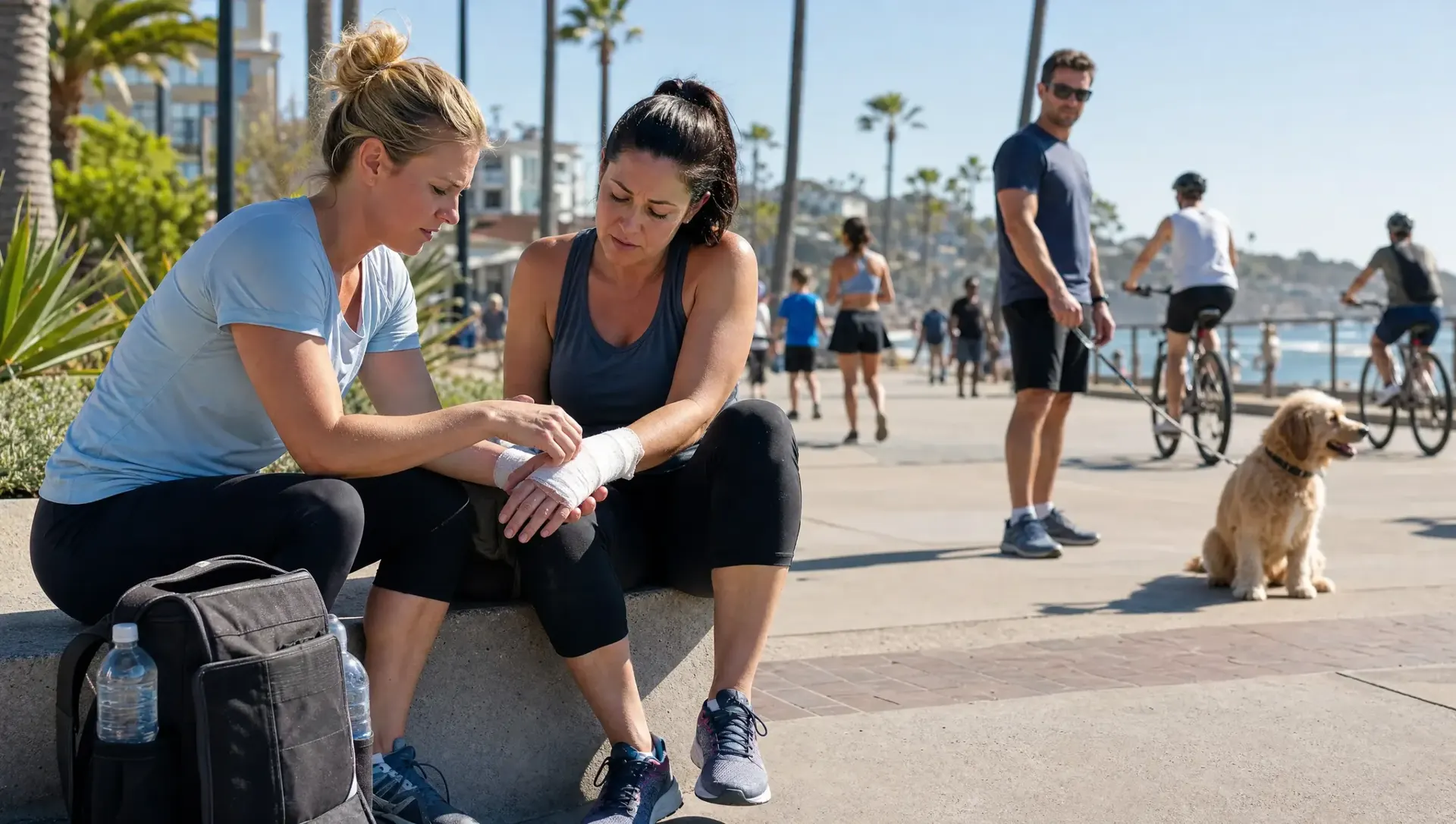
Summer Dog Bite Risks in San Diego: What Victims Should Do Immediately
Summer in San Diego brings people outside in large numbers. Beaches fill up in Pacific Beach, Mission Beach, La Jolla, and Del Mar.

Summer in San Diego brings people outside in large numbers. Beaches fill up in Pacific Beach, Mission Beach, La Jolla, and Del Mar. Parks stay busy from Balboa Park to neighborhood green spaces in North Park, Clairemont, and Chula Vista. Patios and brewery districts in areas like Little Italy, Gaslamp, Liberty Station, and South Park welcome dogs, while farmers markets, street fairs, and weekend events keep sidewalks crowded well into the evening. That active outdoor lifestyle is part of what makes San Diego so appealing. It also creates more chances for close contact between people and dogs.
That matters because more encounters can mean more bite incidents. A dog that feels startled, stressed, overheated, territorial, or overwhelmed in a crowded setting may react in seconds. In a city where people regularly move between beaches, boardwalks, trails, parks, and dog-friendly patios in the same day, those interactions happen often during the summer months. When a bite happens, the steps you take right away can affect your health, your ability to document the incident, and your legal claim.
In this guide, you’ll learn why summer dog bite risks rise in San Diego, what to do after a dog bite in California, when emergency care is necessary, how to report the attack, what evidence to preserve, and how California’s strict liability law may apply. You’ll also see what damages may be available in a claim and when it makes sense to speak with a San Diego dog bite lawyer.
Why Summer Increases Dog Bite Risks in San Diego
San Diego’s warm weather encourages constant outdoor activity. Families spend time at the beach, jog along the Mission Beach Boardwalk, walk dogs around Kate Sessions Park, visit waterfront areas near Seaport Village and Coronado, dine outdoors in neighborhoods like Hillcrest and Kensington, and attend community events throughout the county. More people outside means more interactions with unfamiliar animals in unfamiliar situations.
Summer also changes how dogs behave. Heat, noise, tight spaces, crowds, children running nearby, food on restaurant patios, and long outings can many increase stress. Even friendly dogs can become reactive when they feel cornered, overexcited, or protective. This can happen in places that seem relaxed at first glance, such as a busy coffee shop patio in Ocean Beach, a packed park in Carlsbad, or a crowded festival route in downtown San Diego.
A simple example is a crowded sidewalk near outdoor dining in Little Italy or Pacific Beach. A dog may already feel tense from noise, bikes, strollers, foot traffic, and summer heat. If someone passes too closely, reaches down unexpectedly, or bumps the leash, the dog may bite with little warning.
Common Summer Locations for Dog Bites
Certain places create more opportunities for conflict between dogs and people, especially in peak summer months.
Common settings in San Diego include:
- Dog-friendly beaches and nearby boardwalks
- Public parks and playground areas
- Residential sidewalks and apartment complexes
- Street fairs, farmers markets, and local festivals
- Outdoor restaurants, breweries, and cafes
- Hiking trails and shared recreation paths
- Bayfront walkways, waterfront promenades, and tourist-heavy areas
Specific examples may include busy stretches around Mission Bay, Fiesta Island access points, boardwalk traffic in Mission Beach, family gathering spots in Balboa Park, trail systems around Cowles Mountain, and neighborhood business districts where outdoor dining draws both locals and visitors.
These places are not dangerous by default. But they combine crowds, movement, noise, heat, and distraction, which can raise the odds of a bite.
Why Dogs May Be More Reactive in Summer
A dog does not have to be “aggressive” in general to bite in a specific moment.
Summer conditions in San Diego can make dogs more reactive because of:
- Heat and physical discomfort
- Overstimulation from crowds and noise
- Territorial behavior around owners, food, or space
- Fear around strangers or children
- Stress from unfamiliar environments
- Poor leash control in busy areas
- Long days that involve beaches, patios, events, and heavy foot traffic
Tourist season can also play a role. In summer, many San Diego neighborhoods experience heavier traffic from visitors who may be unfamiliar with leash rules, dog etiquette, or how crowded certain spaces become. The key takeaway is simple: more summer activity often means more unpredictable dog encounters.
How long do I have to file a bicycle accident claim in California?
For most California personal injury claims, including this category, the statute of limitations is two years from the date of the injury under CCP § 335.1. Government claims (against a city, county, or state agency) have a much shorter six-month window under Gov. Code § 911.2 - so do not wait to call.
What To Do Immediately After a Dog Bite in California
If a dog bites you, your first priority is safety. Move away from the animal and get to a secure location. If the bite happens at a beach walkway, park, patio, apartment complex, or neighborhood event, do not stay near the dog just to gather details if the animal still poses a risk. Do not try to argue with the owner at the scene if the dog is still agitated.
Then act quickly.
1. Get to Safety
Create distance between yourself and the dog. If needed, ask someone nearby for help. In busy San Diego locations such as boardwalks, public parks, or outdoor dining corridors, there are often witnesses nearby who can assist. If the injuries are severe or there is heavy bleeding, call 911 right away.
2. Wash the Wound
Clean the wound with soap and water as soon as possible. Prompt cleaning can lower the risk of infection. If possible, flush the area thoroughly for several minutes. If you are away from home, such as at a beach or community event, seek access to a restroom, first-aid station, urgent care, or emergency care as soon as you can.
3. Get Medical Care
Even small puncture wounds can become serious. Dog bites may cause infection, nerve damage, muscle injury, scarring, or complications involving rabies exposure assessment.
If the bite breaks the skin, it is wise to get prompt medical attention. If the injury is deep, bleeding heavily, or involves the face, hands, or a child, seek urgent care immediately. In a county as large as San Diego, people are sometimes tempted to wait until they get home from the beach, a hike, or an event. That delay can make a bad situation worse.
4. Get the Dog Owner’s Information
If the owner is present, collect:
- Full name
- Phone number
- Address
- Dog license information, if available
- Rabies vaccination information
- Name of the dog’s veterinarian, if available
Stay calm and focus on facts. This information can be important for both medical treatment and reporting. If the bite happens in a public setting like a brewery patio, boardwalk, or apartment common area, also note whether staff, security, or property management witnessed the incident.
5. Take Photos Right Away
Photograph:
- Bite wounds before treatment, if possible
- Torn or bloody clothing
- The dog
- The leash, fencing, or surrounding area
- Any visible hazards or lack of control
Good photos can become important evidence later. If the incident occurred in a recognizable San Diego location, photos of the setting may also help establish what happened and why the environment was crowded or chaotic.
When To Seek Emergency Medical Care
Some bites need more than routine follow-up. Go to the emergency room or call 911 if you have:
- Heavy bleeding that does not stop
- Deep puncture wounds or torn skin
- Bites to the face, head, neck, or hands
- Trouble moving a limb or finger
- Signs of severe infection, such as swelling, redness, pus, or fever
- Dizziness, weakness, or signs of shock
- A bite involving a young child, older adult, or someone with a weakened immune system
Rabies concerns also require urgent attention. The CDC advises immediate wound washing and prompt medical evaluation after exposure to an unfamiliar animal or an animal that may have rabies. In many cases, public health professionals and medical providers will evaluate the risk based on the animal, the circumstances, and vaccination information.
A practical rule is this: if the bite broke the skin, do not brush it off. That is especially important if the bite happened while you were out for the day in a place like Mission Bay, Balboa Park, La Jolla Cove, or a crowded neighborhood festival and you are considering “dealing with it later.”
How To Report a Dog Bite in San Diego
Reporting a dog bite helps protect your health and creates an official record of what happened. That record can be valuable if you later file an insurance claim or lawsuit.
San Diego County receives more than 2,500 dog bite reports each year. Under county rules, dogs involved in bites are generally subject to a 10-day quarantine from the date of the bite. This applies even if the dog has a current rabies vaccination.
Why Reporting Matters
Reporting can help:
- Trigger a public health review
- Confirm quarantine procedures
- Document the dog and owner
- Create an official timeline
- Support your injury claim
In a city and county with so many public spaces, this matters. A dog bite on a boardwalk, in a park, outside a restaurant, or in a shared apartment complex area may involve multiple witnesses and recurring public-safety concerns. Reporting helps create accountability and a record that the incident occurred.
What Information To Provide
When making a report, try to include:
- Date, time, and location of the bite
- Description of the dog
- Owner’s name and contact information
- What happened before and during the bite
- Photos and witness details
- Medical treatment received
If the incident happened at a specific local location, be as precise as possible. For example, note whether it occurred near a park entrance, on a beach path, outside a restaurant patio, in a condominium common area, or along a boardwalk. If you are unsure where to start, a San Diego dog bite lawyer can help you understand what records to request and preserve.
Evidence That Can Strengthen a Dog Bite Claim
Dog bite cases often look straightforward, but evidence still matters. The stronger your documentation, the easier it is to show what happened and how the injury affected your life.
Try to preserve:
- Photos of injuries from day one through healing
- Medical records and discharge paperwork
- Bills for treatment, medication, and follow-up care
- Contact details for witnesses
- Incident reports made to animal control or law enforcement
- Proof of lost wages or missed work
- Notes about pain, sleep issues, anxiety, and daily limitations
- Any communication with the dog owner or insurer
If the bite happened in a high-traffic San Diego location, ask whether nearby businesses, apartments, parking structures, or city-facing cameras may have captured the event. In areas with restaurants, retail storefronts, boardwalk traffic, or managed properties, video evidence may exist for typically a short time.
Keep a Recovery Journal
A short daily journal can be very useful.
Write down:
- Pain levels
- Missed activities
- Emotional distress
- Work limitations
- Scarring changes
- Follow-up appointments and treatment
That kind of detail helps show the real impact of the injury, not just the initial wound. If your injury affected your ability to enjoy your normal San Diego routine, such as beach walks, running, biking, hiking, or family outings, include that too.
How California Dog Bite Law May Affect Your Case
California Civil Code section 3342 follows a strict liability rule for many dog bite cases. In simple terms, a dog owner may be liable for damages if their dog bites someone in a public place or while the person is lawfully on private property. The victim does not usually need to prove the owner knew the dog was dangerous before the attack.
That is a major point in California law. In many cases, you do not have to show there was a prior bite or a long history of aggression. That can be important in San Diego, where many bites occur in shared public settings like sidewalks, parks, beaches, trails, and patio areas, or in private places where the injured person had a lawful reason to be present.
What Strict Liability Means
Strict liability means the focus is often on:
- Whether the dog bit you
- Whether you were in a public place or lawfully on private property
- Whether the owner can be identified
This rule can help victims, but it does not mean each case is automatic. Insurance companies may still dispute how the incident happened, the severity of the injury, or the value of your damages. They may also question details about the setting, especially when the incident happened in a busy San Diego location with many people coming and going.
Situations That May Complicate a Claim
Some cases involve added legal questions, such as:
- Disputes over who owned or controlled the dog
- Claims that the victim was trespassing
- Attacks that involve more than a bite, such as knockdown injuries
- Cases involving landlords, businesses, or third-party property issues
That is one reason many victims benefit from speaking with a dog bite injury lawyer early. In San Diego, these issues may come up in apartment communities, short-term rental properties, mixed-use developments, or crowded commercial spaces where more than one party may have information relevant to the claim.
What Damages May Be Available After a Dog Bite
A dog bite can cause much more than a puncture wound. Some victims need stitches, surgery, infection treatment, scar care, counseling, or time away from work. Children may face lasting trauma, and adults may deal with visible scarring or fear around animals long after the event.
Depending on the facts of the case, damages may include:
- Emergency room and hospital bills
- Follow-up medical treatment
- Plastic surgery or scar revision
- Medication costs
- Lost wages
- Reduced earning ability
- Pain and suffering
- Emotional distress
- Disfigurement or permanent scarring
A strong claim should account for both current losses and future effects. For many San Diego residents, that may also include the impact on an active lifestyle, daily commuting, service work, hospitality work, or outdoor recreation that is part of normal life in the region.
Common Mistakes To Avoid After a Dog Bite
After a bite, people often try to move on too fast. That can create avoidable problems.
Avoid these common mistakes:
- Delaying medical treatment
- Failing to report the bite
- Not getting the owner’s information
- Throwing away damaged clothing or shoes
- Forgetting to photograph injuries as they heal
- Giving recorded statements to insurers too soon
- Assuming a minor bite is not worth documenting
A quick example: a person may think a small bite is no big deal after a day at the beach or a walk through a summer market, then develop an infection days later. Without early photos, prompt care, and a report, proving the full story becomes harder.
When To Contact a San Diego Dog Bite Lawyer
If you suffered a dog bite during the summer in San Diego, it is smart to speak with a lawyer as soon as possible, especially if:
- The bite required medical treatment
- You missed work
- A child was injured
- The owner or insurer disputes what happened
- You have scarring or lasting symptoms
- You are unsure how to report or document the incident
At Devoted Injury Lawyers, we are committed to helping injured people understand their options, protect key evidence, and pursue fair compensation under California law. A dog bite claim may seem simple at first, but important details can affect liability, insurance coverage, and case value. Local knowledge matters too. Cases involving crowded public spaces, shared residential properties, neighborhood business districts, or popular outdoor destinations often require careful documentation from the start.
If you need guidance after a bite, contact Devoted Injury Lawyers to discuss your situation and learn what steps to take next. Clear advice early on can make a meaningful difference in your recovery and your claim.
Final Takeaway
Summer dog bite risks increase in San Diego because people and dogs share more space more often. Beaches, parks, sidewalks, outdoor dining spots, boardwalks, trails, and neighborhood events can many create conditions where a stressed or poorly controlled dog reacts suddenly. From Mission Beach and Pacific Beach to Balboa Park, Little Italy, and busy residential communities across the county, these incidents can happen in places people visit each day.
If you are bitten, take the injury seriously. Get to safety, wash the wound, seek medical care, report the bite, and preserve evidence from the start. Those first steps can protect your health and strengthen your legal claim. California’s strict liability law may give victims a strong path to recovery, but documentation still matters. Medical records, photos, witness information, and official reports can many make a difference.
If you or a loved one was hurt in a dog attack, contact Devoted Injury Lawyers for guidance. Speaking with an experienced San Diego dog bite lawyer now can help you avoid mistakes and move forward with confidence.
What should I do today?
Take three steps right now: (1) get any needed medical care and follow through with each visit, (2) photograph injuries, vehicles, scene, and any property damage before it changes, and (3) call us before talking to the at-fault insurer. Call (888) 760-2LAW for a free, no-pressure consultation, or visit our contact page to send the details. We answer 24/7, work on contingency, and will tell you straight whether you might have a case. Past results do not guarantee a similar outcome.
Disclaimer: The information provided on DevotedInjuryLawyers.com is for general informational purposes only and does not constitute legal advice.
Jeff Yates, Esq.
CA Bar #332659 · Admitted 2021 · PI since 2011
Jeff is the founding partner of Devoted Injury Lawyers. He has worked in California personal injury since 2011 and holds a Justia 10.0 rating. He is the default legal reviewer for Devoted blog content.
Read Jeff's full bio →One call.
One team.
One less thing
to worry about.
Get a fast case evaluation. Free 24/7 consultation. No fee unless we win. Hablamos Español.