

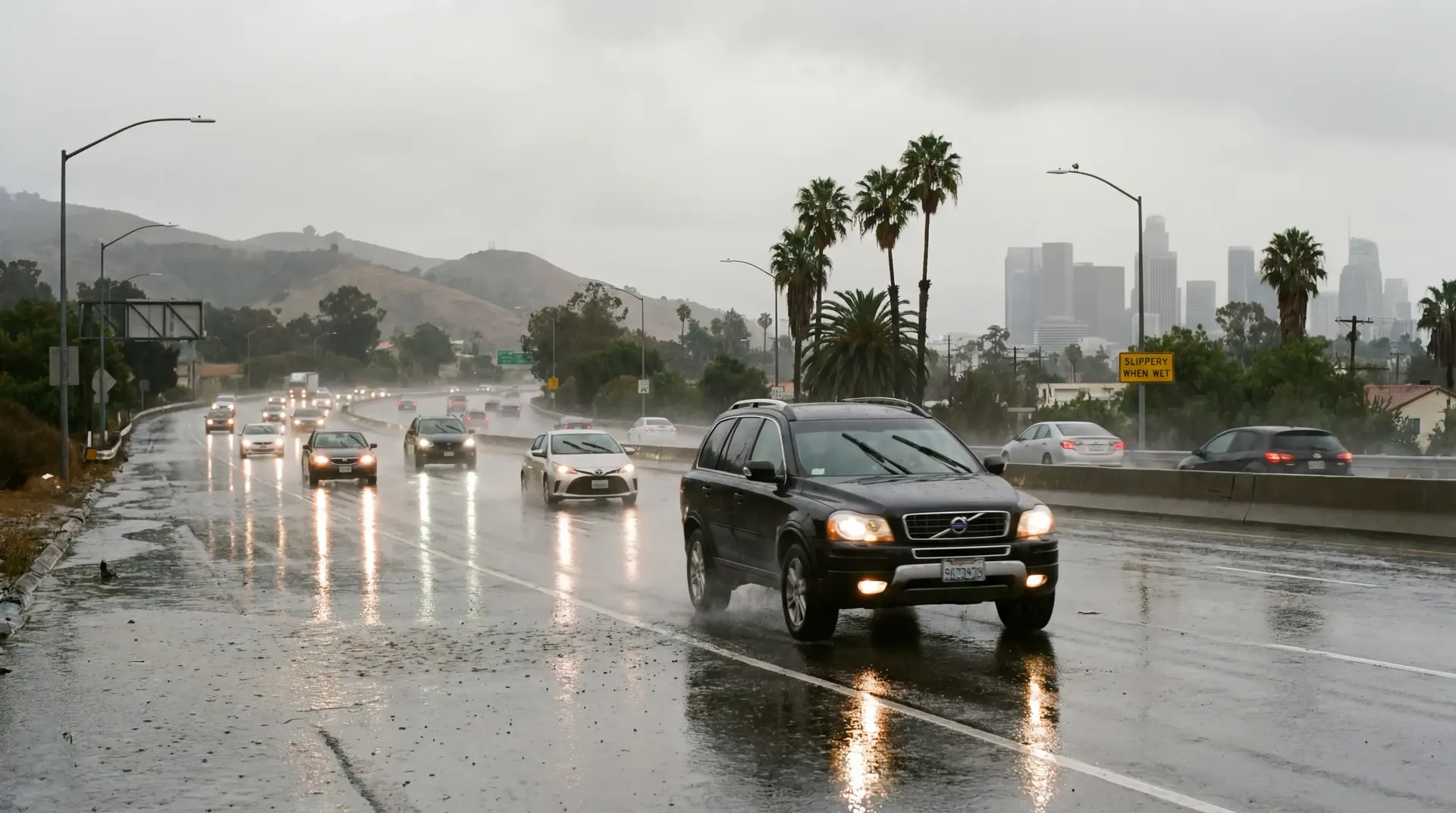
Rain or Shine: How Weather Impacts Car Accident Fault in California
California is famous for its sunshine, but we know the weather isn't usually perfect. From sudden downpours on the I-5 to dense fog in the Central Valley, driving conditions can change rapidly.

California is famous for its sunshine, but we know the weather isn't usually perfect. From sudden downpours on the I-5 to dense fog in the Central Valley, driving conditions can change rapidly. When an accident happens during bad weather, many drivers assume Mother Nature is to blame. However, California law sees it differently.
Understanding how weather conditions affect liability is crucial if you’ve been injured in a crash. At Devoted Injury Lawyers, we help clients navigate these complex cases each day. This guide breaks down the legal reality of "blaming the rain" and explains what you need to know to protect your rights.
The Myth of the "Weather Defense"
Many drivers believe that if they hydroplane on a wet road or slide on an icy patch, the accident is just an unfortunate event with few people at fault. This is rarely true legally.
In California, many drivers have a legal duty to exercise "reasonable care" while operating a vehicle. This duty doesn't stop when it starts raining; in fact, the standard for reasonable care often increases. The law requires drivers to adjust their behavior to match the current conditions. If the speed limit is 65 mph but visibility is low due to fog, driving at 65 mph might be considered negligent, even if it is technically the legal limit.
What is the Basic Speed Law?
California Vehicle Code 22350, known as the Basic Speed Law, states: "No person shall drive a vehicle upon a highway at a speed greater than is reasonable or prudent having due regard for weather, visibility, the traffic on, and the surface and width of, the highway, and in no event at a speed which endangers the safety of persons or property."
This means a driver may not use "slick roads" as an excuse for rear-ending you. If the roads were slick, they should have:
- Slowed down significantly.
- Increased following distance.
- Ensured their tires and brakes were in good condition.
If they failed to do so, they are likely at fault for the collision.
How long do I have to file a car accident claim in California?
For most California personal injury claims, including this category, the statute of limitations is two years from the date of the injury under CCP § 335.1. Government claims (against a city, county, or state agency) have a much shorter six-month window under Gov. Code § 911.2 - so do not wait to call.
Common Weather Conditions and Liability
Different weather patterns present unique challenges, but the underlying legal principle remains: drivers need to adapt. Here is how specific conditions play a role in determining fault.
Rain and Hydroplaning
Rain is the most common adverse weather condition in California. The first rain after a dry spell is particularly dangerous because oil and grease on the road rise to the surface, making asphalt incredibly slippery.
When a driver hydroplanes and hits another car, insurance adjusters will look at:
- Speed: Was the driver going too fast for the wet conditions?
- Tire Condition: Were the tires bald or underinflated? Negligent vehicle maintenance can establish liability.
- Sudden Maneuvers: Did the driver brake hard or turn sharply instead of handling the slide correctly?
Fog and Visibility Issues
Dense fog is a major hazard, especially in coastal areas and valleys. Multi-car pileups are unfortunately common in these conditions.
In fog-related accidents, liability often falls on drivers who:
- Failed to use low-beam headlights (high beams reflect off fog, worsening visibility).
- Followed too closely (tailgating).
- Stopped in a traffic lane rather than pulling largely off the road.
High Winds
High winds can be surprisingly dangerous, especially for high-profile vehicles like semi-trucks. If a strong gust pushes a car into your lane, the driver might claim it was an "Act of God." However, we investigate whether they were gripping the wheel properly or if a commercial truck driver ignored wind advisories that should have kept them off the road.
Sun Glare
This is a uniquely Californian problem. Intense sunrise or sunset glare can blind drivers. However, "I couldn't see because of the sun" is rarely a valid legal defense. Drivers are expected to have sunglasses, use their visors, and slow down or pull over if they may not see the road safely.
How We Prove Fault in Weather-Related Accidents
When the other driver blames the weather, Devoted Injury Lawyers steps in to uncover the truth. Proving negligence requires a strategic approach.
1. Gathering Evidence at the Scene
Police reports are vital. Officers often note the weather conditions and whether a driver was traveling at an "unsafe speed for conditions." Photos of skid marks, vehicle damage, and the road surface provide critical context.
2. Analyzing "The Reasonable Person" Standard
We ask a simple question: Would a reasonable, careful person have driven differently under the same circumstances? If a reasonable person would have slowed down to 40 mph in a storm, but the defendant was driving 60 mph, that gap establishes negligence.
3. Consulting Experts
We often work with accident reconstruction specialists. These experts can calculate the speed of a vehicle based on skid marks and impact force, factoring in the friction coefficient of a wet road. This scientific data can disprove a driver's claim that they were driving slowly.
4. Investigating Vehicle Maintenance
Sometimes the fault lies not just in driving behavior but in equipment. We may subpoena maintenance records to see if worn windshield wipers or bald tires contributed to the crash. If a driver knew their equipment was faulty and drove in bad weather anyway, their liability increases.
Comparative Negligence: What If You Were Also Affected?
California follows a pure comparative negligence rule. This means that even if you were partially at fault-perhaps you didn't have your headlights on during a rainstorm-you can still recover damages. However, your compensation will be reduced by your percentage of fault.
For example, if the court finds you were 20% responsible for the accident and the other driver was 80% responsible, you would receive 80% of the total settlement award. Insurance companies often try to use weather conditions to pin more blame on you. Having skilled legal representation is essential to ensure liability is apportioned correctly.
Steps to Take After a Bad Weather Accident
If you are involved in a collision during adverse weather, protect your claim immediately:
- Check for Injuries: Call 911 if anyone is hurt.
- Move to Safety: If possible, get out of the flow of traffic, especially in low visibility.
- Document the Conditions: Take photos or videos of the weather, road surface (puddles, ice), and visibility levels.
- Do Not Admit Fault: Rarely say "I shouldn't have been driving" or "It was so slippery I couldn't stop." Stick to the facts when talking to police.
- Contact a Lawyer: Speak to an attorney before giving a recorded statement to insurance adjusters.
Conclusion
Weather is a factor in accidents, but it is rarely an excuse. Drivers in California have a responsibility to respect the road conditions and prioritize safety. When they fail to do so, they put many people at risk.
At Devoted Injury Lawyers, we understand the nuances of California traffic laws and how to counter the "Act of God" defense. If you’ve been injured in an accident where weather played a role, don’t let an insurance company dismiss your claim. We are here to help you get the compensation you deserve.
Contact us today for a free consultation and let us review the details of your case.
What should I do today?
Take three steps right now: (1) get any needed medical care and follow through with each visit, (2) photograph injuries, vehicles, scene, and any property damage before it changes, and (3) call us before talking to the at-fault insurer. Call (888) 760-2LAW for a free, no-pressure consultation, or visit our contact page to send the details. We answer 24/7, work on contingency, and will tell you straight whether you might have a case. Past results do not guarantee a similar outcome.
Disclaimer: The information provided on DevotedInjuryLawyers.com is for general informational purposes only and does not constitute legal advice.
Jeff Yates, Esq.
CA Bar #332659 · Admitted 2021 · PI since 2011
Jeff is the founding partner of Devoted Injury Lawyers. He has worked in California personal injury since 2011 and holds a Justia 10.0 rating. He is the default legal reviewer for Devoted blog content.
Read Jeff's full bio →One call.
One team.
One less thing
to worry about.
Get a fast case evaluation. Free 24/7 consultation. No fee unless we win. Hablamos Español.