

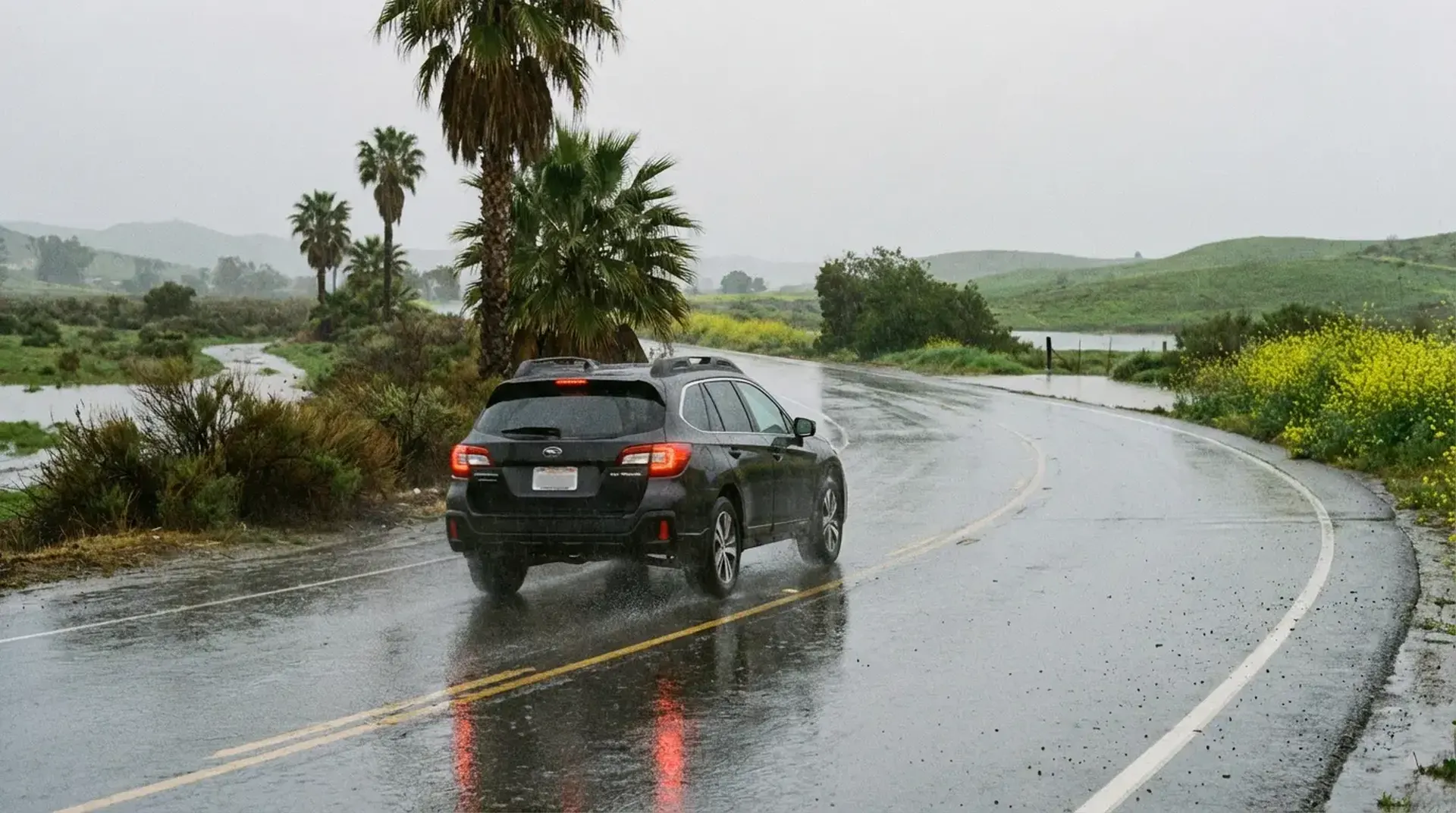
Rain, Risk, and Roads: Southern California’s Rainy Season Dangers
Most people picture Southern California as a land of endless sunshine and clear blue skies. While that’s often true, our idyllic weather can make us forget a serious risk: driving in the rain.

Quick answer: Under California law - specifically CCP § 335.1 - most personal injury claims have a two-year deadline from the date of injury (one year for medical malpractice, which we do not handle). Acting quickly preserves evidence, witness memories, and your right to recover medical bills, lost income, and pain and suffering. Devoted Injury Lawyers is a contingency-fee firm - you pay no fee unless we win.
Most people picture Southern California as a land of endless sunshine and clear blue skies. While that’s often true, our idyllic weather can make us forget a serious risk: driving in the rain. When the skies do open up, especially during the spring, local roads can become surprisingly treacherous. Many drivers are simply out of practice, and the combination of wet asphalt and months of accumulated oil creates uniquely slick conditions.
Car accidents in the rain can be complex and devastating. Understanding the risks is the first step, but knowing your rights after a crash is just as important. At Devoted Injury Lawyers, we have seen firsthand how a sudden downpour can change lives. We are dedicated to helping victims of weather-related accidents navigate the legal aftermath and secure the compensation they deserve. This guide will explore why rain increases accident risks in our region and what you can do to stay safe.
Why Does Rain Make Southern California Roads So Dangerous?
Rain itself doesn't cause accidents, but it creates conditions that significantly increase the likelihood of one. In a region where drivers are accustomed to dry roads, even a light drizzle can lead to a surge in collisions.
The "First Flush" Phenomenon
The first rain after a long dry spell is often the most dangerous. Over weeks and months, engine oil, grease, and other automotive fluids leak onto the roadways. These substances don't just disappear; they bake into the asphalt under the sun.
When rain finally falls, it mixes with this buildup, creating an incredibly slick, greasy film on the road surface. This "first flush" effect can make roads as slippery as ice, drastically reducing tire traction. Drivers who fail to adjust their speed for this invisible hazard can easily lose control, leading to spinouts and collisions.
Reduced Visibility and Hydroplaning
Heavy rainfall presents two immediate and obvious dangers: poor visibility and hydroplaning.
- Limited Sight: A downpour can overwhelm even the best windshield wipers, making it difficult to see other vehicles, pedestrians, and road markings. Headlight glare reflecting off wet surfaces can further impair a driver's vision, especially at night. This reduction in visibility shortens reaction times and increases the chance of a collision.
- Hydroplaning: This occurs when a layer of water builds up between a vehicle's tires and the road surface, causing a loss of traction. The driver effectively loses control of steering and braking. Hydroplaning can happen at speeds as low as 35 miles per hour, especially with worn tires or in standing water. It’s a frightening experience that can quickly lead to a serious crash.
Poor Road Maintenance and Design
Some roads in Southern California are not designed to handle significant rainfall. Poor drainage can lead to pooling water, creating hidden hydroplaning risks. Faded lane markers, obscured by rain and glare, make it difficult for drivers to stay in their lanes, increasing the odds of sideswipe and head-on accidents. Potholes hidden beneath puddles can cause tire blowouts or cause a driver to swerve suddenly into another lane.
How long do I have to file a car accident claim in California?
For most California personal injury claims, including this category, the statute of limitations is two years from the date of the injury under CCP § 335.1. Government claims (against a city, county, or state agency) have a much shorter six-month window under Gov. Code § 911.2 - so do not wait to call.
Your Legal Rights After a Rainy-Day Accident
If you are injured in a car accident during rainy weather, you may assume it was just an "act of God." However, that is rarely the case. Many drivers have a legal responsibility to operate their vehicles safely for the current conditions. This means slowing down, increasing following distance, and using headlights when it's raining.
A driver who causes an accident by driving too fast for the wet conditions can be held negligent. Proving this negligence is key to a successful personal injury claim.
At Devoted Injury Lawyers, we specialize in investigating the complex factors of weather-related accidents. We can help establish liability by:
- Analyzing the police report: Official reports often note weather conditions and may indicate if a driver was traveling at an unsafe speed.
- Gathering witness statements: Other drivers or bystanders may have seen the at-fault driver speeding, tailgating, or driving recklessly.
- Consulting with experts: Accident reconstruction specialists can help demonstrate how speed and wet roads contributed to the collision.
- Securing traffic and surveillance footage: Video evidence can provide indisputable proof of another driver's negligence.
You should not have to bear the financial burden of medical bills, lost wages, and vehicle repairs because another driver failed to adapt to the rain. Our team is here to fight for your right to fair compensation.
Actionable Tips for Safe Driving in the Rain
Prevention is usually the best strategy. By taking extra precautions, you can significantly reduce your risk of being in a weather-related accident.
- Slow Down: This is the single most important adjustment you can make. Reduce your speed by at least one-third on wet roads. Slower speeds increase your tires' ability to grip the road and give you more time to react.
- Increase Following Distance: Double your following distance from the usual three seconds to six seconds or more. This provides a crucial buffer for braking on slick surfaces.
- Turn On Your Headlights: Using your low-beam headlights makes you more visible to other drivers. It's also the law in California to have your headlights on anytime you are using your windshield wipers.
- Check Your Equipment: Before the rainy season starts, inspect your tires, windshield wipers, and defroster. Ensure your tires have adequate tread and are properly inflated. Replace worn wiper blades that leave streaks.
- Avoid Cruise Control: Using cruise control in the rain is dangerous. If you hydroplane, your car will try to accelerate to maintain speed, making it harder to regain control.
- Stay Alert and Minimize Distractions: Put your phone away and focus largely on the road. Watch for brake lights and be prepared for sudden stops or slowdowns.
- Know How to Handle a Skid: If your car begins to hydroplane or skid, do not slam on the brakes. Ease your foot off the accelerator and steer gently in the direction you want the front of your car to go.
Injured in a Rain-Related Accident? We Can Help.
Driving in Southern California's rain requires skill and attention. When other drivers fail to exercise the necessary caution, innocent people get hurt. If you or a loved one has been injured in a car accident on a rainy day, you don't have to face the aftermath alone.
The team at Devoted Injury Lawyers has the experience and resources to handle these challenging cases. We understand the specific dynamics of wet-weather collisions and know how to build a strong case to prove another driver's negligence. We are committed to providing compassionate guidance and aggressive representation to ensure you receive the justice and compensation you are owed.
Contact us today for a free, no-obligation consultation to discuss your case. Let us handle the legal complexities so you can focus on what matters most: your recovery.
What should I do today?
Take three steps right now: (1) get any needed medical care and follow through with each visit, (2) photograph injuries, vehicles, scene, and any property damage before it changes, and (3) call us before talking to the at-fault insurer. Call (888) 760-2LAW for a free, no-pressure consultation, or visit our contact page to send the details. We answer 24/7, work on contingency, and will tell you straight whether you might have a case. Past results do not guarantee a similar outcome.
Disclaimer: The information provided on DevotedInjuryLawyers.com is for general informational purposes only and does not constitute legal advice.
Jeff Yates, Esq.
CA Bar #332659 · Admitted 2021 · PI since 2011
Jeff is the founding partner of Devoted Injury Lawyers. He has worked in California personal injury since 2011 and holds a Justia 10.0 rating. He is the default legal reviewer for Devoted blog content.
Read Jeff's full bio →One call.
One team.
One less thing
to worry about.
Get a fast case evaluation. Free 24/7 consultation. No fee unless we win. Hablamos Español.