

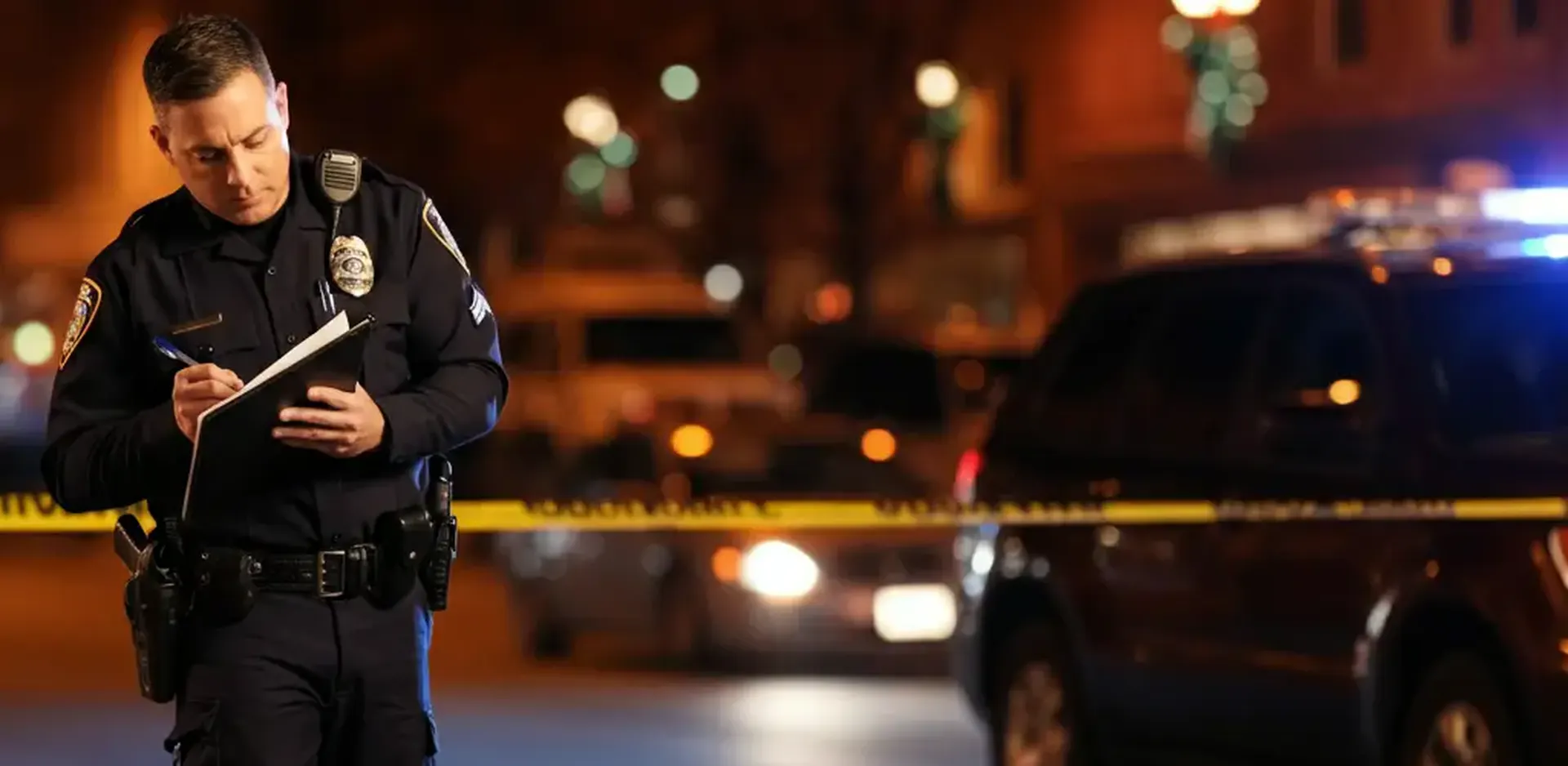
Police Reports in San Diego Injury Cases
After an accident, your world can feel turned upside down. You are dealing with injuries, mounting medical bills, and the stress of what comes next.

After an accident, your world can feel turned upside down. You are dealing with injuries, mounting medical bills, and the stress of what comes next. In the middle of this chaos, one of the most important documents for your potential personal injury claim is the police report. At Devoted Injury Lawyers, we have seen firsthand how a comprehensive police report can shape the outcome of a case in San Diego. This document often serves as the first official record of what happened, making it a cornerstone of your claim.
This article will guide you through the role of police reports in personal injury cases, especially those that happen during busy holiday seasons. We will cover why these reports are so crucial, what information they contain, how to get a copy, and what to do if the report contains errors. Understanding this process can empower you to protect your rights and build a stronger case.
Why are Police Reports Important for Your Claim?
A police report is a summary of the facts of an accident, compiled by a law enforcement officer. While the report itself is often considered hearsay and may not be directly admissible as evidence in court, it is an invaluable tool for your personal injury attorney and insurance companies.
Here’s why it’s so important:
- Initial Factual Record: It is one of the first official accounts of the incident. It captures details like the date, time, location, weather conditions, and involved parties while the information is still fresh.
- Identifies Witnesses: The report lists the names and contact information of many people involved, including independent witnesses. These individuals can provide crucial testimony to support your version of events.
- Officer’s Observations: The responding officer will document their observations of the scene, including vehicle damage, road conditions, and any physical evidence. They might also include a diagram of the accident scene.
- Preliminary Fault Assessment: The officer may note any traffic violations they observed and issue citations. This preliminary determination of fault, while not legally binding, can be very persuasive for insurance adjusters.
For these reasons, the police report often becomes the foundation upon which your entire personal injury claim is built.
How long do I have to file a car accident claim in California?
For most California personal injury claims, including this category, the statute of limitations is two years from the date of the injury under CCP § 335.1. Government claims (against a city, county, or state agency) have a much shorter six-month window under Gov. Code § 911.2 - so do not wait to call.
Holiday Accidents in San Diego: A Special Case
San Diego’s beautiful weather and attractions make it a popular destination, especially during holidays like Memorial Day, Fourth of July, Thanksgiving, and Christmas. This influx of tourists and residents traveling leads to congested roads, crowded stores, and a higher risk of accidents.
During these hectic times, a police report becomes even more critical.
- Car Accidents: Busy travel seasons mean more cars on the road and a higher likelihood of collisions. A police report can document factors like speeding, distracted driving (e.g., from holiday travel plans on GPS), or driving under the influence, which can be more common during festive periods.
- Slip and Falls: Holiday shopping and events can lead to crowded venues. Spills, poorly managed displays, or icy walkways can cause slip and fall incidents. Calling the police or having the business provide a report of the accident to document the hazardous condition and your injury can provide vital evidence before the property owner has a chance to clean it up.
In the confusion following a holiday accident, details can get lost. A police report provides a clear, official narrative that helps cut through the chaos.
What Information is in a San Diego Police Report?
When an officer from the San Diego Police Department or California Highway Patrol responds to an accident, they will complete a traffic collision report. These reports are standardized to ensure they capture many necessary details.
Key information you will find includes:
- Parties Involved: Names, addresses, driver's license numbers, and insurance information for many drivers and vehicle owners.
- Date, Time, and Location: The precise details of when and where the accident occurred.
- Statements: Summaries of what drivers, passengers, and witnesses told the officer.
- Diagram and Narrative: A drawing of the accident scene showing the positions of vehicles and a written description of how the officer believes the collision happened.
- Violations and Citations: Any traffic laws that were broken and whether any tickets were issued.
- Injuries and Property Damage: A description of any visible injuries and the extent of damage to vehicles or property.
Reviewing this information carefully is a crucial step. It provides the raw data your attorney at Devoted Injury Lawyers will use to start building your case.
How to Obtain Your Police Report in San Diego
After an accident, you will need to get a copy of the official police report. The process depends on which law enforcement agency responded to the scene.
San Diego Police Department (SDPD)
If your accident occurred within San Diego city limits and was investigated by the SDPD, you can request a copy of the report online or by mail. You will need to provide information such as the report number (which the officer should have given you at the scene), the date of the incident, and the names of the involved parties. There is a small fee for obtaining the report. You can find more details on the City of San Diego's website.
California Highway Patrol (CHP)
For accidents on San Diego's highways and freeways, the CHP likely responded. You can request a copy of the Traffic Collision Report by completing a specific form (CHP 190) and submitting it online or mailing it to the local CHP office that handled the incident.
Your personal injury attorney can also handle this process for you. At Devoted Injury Lawyers, we routinely obtain these reports for our clients, ensuring many the necessary paperwork is managed correctly and efficiently.
What if the Police Report is Wrong?
Police officers are human, and mistakes can happen. Sometimes a report may contain factual errors or a conclusion you disagree with. It could be a simple mistake, like a misspelled name, or a significant one, like an incorrect description of the accident.
If you find an error, it is important to act quickly.
- Factual Errors: For simple mistakes (e.g., wrong license plate number, incorrect address), you can contact the reporting officer or their department to request an amendment. You may need to provide documentation to prove the correct information.
- Disputed Information: If you disagree with the officer’s narrative or their assessment of fault, correcting it is more complex. You may not force an officer to change their opinion. However, you can submit your own written statement to be added as a supplement to the report.
This is where an experienced attorney is invaluable. We can help you file a supplemental report and, more importantly, gather other evidence-like witness testimony, photos from the scene, and expert analysis-to counter the incorrect information and prove what really happened.
Your Next Steps with Devoted Injury Lawyers
A police report is a powerful piece of evidence, but it is just one part of a successful personal injury claim. If you have been injured in an accident in San Diego, the most important step you can take is to seek skilled legal representation.
The team at Devoted Injury Lawyers is here to help you handle the procedural side of your case. We will obtain and analyze the police report, gather additional evidence, and fight to ensure you receive the compensation you deserve. Contact us today for a free, no-obligation consultation to discuss your case.
What should I do today?
Take three steps right now: (1) get any needed medical care and follow through with each visit, (2) photograph injuries, vehicles, scene, and any property damage before it changes, and (3) call us before talking to the at-fault insurer. Call (888) 760-2LAW for a free, no-pressure consultation, or visit our contact page to send the details. We answer 24/7, work on contingency, and will tell you straight whether you might have a case. Past results do not guarantee a similar outcome.
Disclaimer: The information provided on DevotedInjuryLawyers.com is for general informational purposes only and does not constitute legal advice.
Jeff Yates, Esq.
CA Bar #332659 · Admitted 2021 · PI since 2011
Jeff is the founding partner of Devoted Injury Lawyers. He has worked in California personal injury since 2011 and holds a Justia 10.0 rating. He is the default legal reviewer for Devoted blog content.
Read Jeff's full bio →One call.
One team.
One less thing
to worry about.
Get a fast case evaluation. Free 24/7 consultation. No fee unless we win. Hablamos Español.