

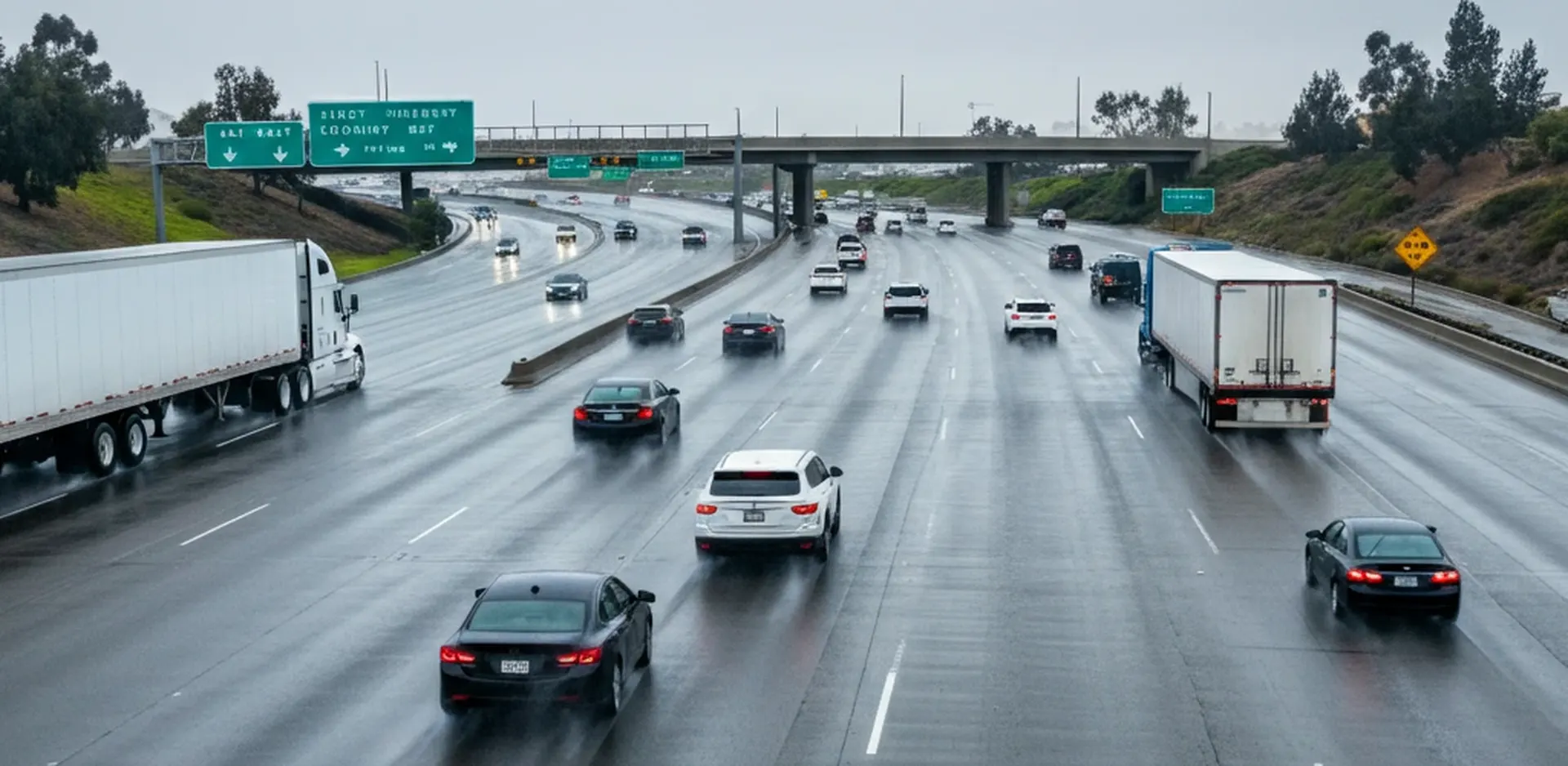
Driving Safe: Avoiding Truck Accidents in Southern California
Navigating Southern California's busy freeways requires constant attention, especially when sharing the road with large commercial trucks. These vehicles are essential to our economy, but their size and weight present unique risks to other drivers.

Quick answer: Under California law - specifically CCP § 335.1 - most personal injury claims have a two-year deadline from the date of injury (one year for medical malpractice, which we do not handle). Acting quickly preserves evidence, witness memories, and your right to recover medical bills, lost income, and pain and suffering. Devoted Injury Lawyers is a contingency-fee firm - you pay no fee unless we win.
Navigating Southern California's busy freeways requires constant attention, especially when sharing the road with large commercial trucks. These vehicles are essential to our economy, but their size and weight present unique risks to other drivers. The holiday season, combined with unpredictable winter weather, typically amplifies these dangers.
At Devoted Injury Lawyers, we see the devastating impact of serious truck collisions. Our goal is to both represent victims and to empower drivers with the knowledge to prevent these incidents from happening. This guide offers practical advice for avoiding common truck accident scenarios on Southern California roads, helping you and your loved ones stay safe.
Understanding the Unique Risks of Large Trucks
Before diving into safety tips, it's important to understand why large trucks, also known as semi-trucks or 18-wheelers, behave differently than passenger cars.
- Massive Blind Spots: Commercial trucks have significant blind spots, often called "No-Zones," on many four sides. If you may not see the truck driver in their side mirror, they likely may not see you.
- Longer Stopping Distances: A fully loaded truck traveling at 65 mph needs nearly the length of two football fields to come to a complete stop. This is far longer than the distance a standard car requires, making sudden stops in front of a truck extremely dangerous.
- Wide Turns: Trucks need a lot of space to make turns, especially right turns. They often swing wide into the left lane to navigate a right-hand corner. Drivers who try to squeeze past on the right can easily get caught and crushed.
- Driver Fatigue: Truck drivers work long hours and can suffer from fatigue, which impairs reaction time and judgment just like driving under the influence.
How long do I have to file a car accident claim in California?
For most California personal injury claims, including this category, the statute of limitations is two years from the date of the injury under CCP § 335.1. Government claims (against a city, county, or state agency) have a much shorter six-month window under Gov. Code § 911.2 - so do not wait to call.
Holiday Travel and Winter Weather: A Dangerous Combination
The period between Thanksgiving and New Year's sees a major spike in traffic volume across Southern California. This congestion, mixed with the stress of holiday travel, creates a hazardous environment. Adding winter weather to the mix-even our milder Southern California version-escalates the risk.
Challenges of Holiday Driving
Holiday travel on freeways like the I-5, I-15, and the 91 Freeway means more cars, more trucks, and more potential for conflict. Increased traffic density reduces the space cushion between vehicles, leaving less room for error. Impatient drivers may take risks, such as tailgating or making aggressive lane changes, that are especially perilous around large trucks.
Southern California's Winter Weather Risks
While we don't face blizzards, Southern California's winter brings its own set of challenges that can contribute to serious truck accidents.
- Rain and Slick Roads: Our infrequent rain leads to an accumulation of oil and debris on the road. When the first winter rains fall, the surface becomes incredibly slick. This significantly increases a truck's already long stopping distance and makes jackknifing more likely.
- Fog: Dense "Tule fog" can blanket the Central Valley and parts of the Inland Empire, drastically reducing visibility. In these conditions, it can be nearly impossible to see a slowed or stopped truck ahead until it's too late.
- Mountain Passes: The Grapevine (I-5) and Cajon Pass (I-15) are critical routes for commercial trucking. These areas can experience sudden snow, ice, and high winds, creating treacherous conditions. Trucks can lose traction, slide, or even be blown over.
Actionable Tips to Avoid Southern California Truck Accidents
Staying safe requires a defensive driving mindset. By anticipating the actions of truck drivers and understanding their limitations, you can protect yourself and your passengers.
1. Master the "No-Zones"
The single most important rule is to stay out of a truck's blind spots. The four No-Zones are:
- Directly in front: Avoid cutting too closely in front of a truck.
- Directly behind: If you are tailgating a truck, the driver may not see you.
- Along both sides: The blind spot on the right side of the truck is particularly large, extending across multiple lanes.
When you pass a truck, do so quickly and on the left side, where the driver's blind spot is smaller. Before merging back into the lane, make sure you can see the entire front of the truck in your rearview mirror.
2. Give Trucks Plenty of Space
Space is your most valuable safety tool.
- Don't Tailgate: Maintain a following distance of at least four to five seconds behind a truck. This gives you time to react if the truck brakes suddenly and keeps you out of its rear blind spot.
- Allow Room for Turns: When stopped at an intersection, rarely pull up alongside a truck that has its turn signal on. Stay behind the white stop line to give it the room it needs to complete the turn safely.
- Anticipate Wide Turns: If a truck is signaling a right turn, do not try to pass it on the right. Assume it will swing wide.
3. Drive Predictably and Defensively
Your actions directly influence the safety of many people around you.
- Use Your Signals: Usually signal your intentions early, especially when changing lanes or merging near a truck. This communicates your next move and gives the truck driver time to adjust.
- Avoid Sudden Movements: Do not make abrupt lane changes or brake suddenly in front of a truck. Their inability to stop quickly makes such maneuvers incredibly dangerous.
- Be Patient: Passing a truck requires speed and space. If conditions aren't right, it is safer to stay behind it until you have a clear, safe opportunity to pass.
4. Adjust for Weather and Road Conditions
Usually adapt your driving to the environment.
- Slow Down in Rain or Fog: Reduce your speed significantly in adverse weather. This increases your tire traction and gives you more time to react. The California Driver Handbook advises driving slower than the posted speed limit in bad weather.
- Increase Following Distance: In rain, fog, or on slick roads, double your following distance from a truck to at least eight seconds.
- Check Conditions Before You Go: Before heading into mountain passes like the Grapevine, check Caltrans for road conditions and potential chain controls.
What to Do If You Are in a Truck Accident
Even the most careful drivers can become victims of a truck accident caused by negligence. If you are involved in a collision, your first priority is safety.
- Check for Injuries and Call 911: Report the accident and any injuries immediately.
- Move to Safety: If possible, move your vehicle to the shoulder to avoid further collisions.
- Gather Information: Exchange insurance and contact information with the other driver. Get the truck's license plate number, company name, and any DOT numbers displayed on the vehicle.
- Document the Scene: Take photos and videos of the vehicles, road conditions, and any visible injuries.
- Seek Medical Attention: Even if you feel fine, get a medical evaluation. Some serious injuries may not have immediate symptoms.
- Do Not Admit Fault: Avoid making statements about who was at fault to the other driver, their company, or insurance adjusters.
How a Truck Accident Attorney Can Help
Truck accident cases are far more complex than typical car accidents. They often involve state and federal regulations, multiple liable parties (the driver, the trucking company, the cargo loader), and aggressive insurance companies.
The team at Devoted Injury Lawyers has the experience to handle these complexities. We investigate each angle, from driver logs and vehicle maintenance records to company hiring practices. We are dedicated to ensuring victims of Southern California truck accidents receive the full compensation they deserve for their medical bills, lost wages, and pain and suffering.
Drive safely this holiday season. By respecting the challenges of large trucks and adjusting for conditions, you can significantly reduce your risk of an accident. If the worst does happen, know that Devoted Injury Lawyers is here to fight for you.
What should I do today?
Take three steps right now: (1) get any needed medical care and follow through with each visit, (2) photograph injuries, vehicles, scene, and any property damage before it changes, and (3) call us before talking to the at-fault insurer. Call (888) 760-2LAW for a free, no-pressure consultation, or visit our contact page to send the details. We answer 24/7, work on contingency, and will tell you straight whether you might have a case. Past results do not guarantee a similar outcome.
Disclaimer: The information provided on DevotedInjuryLawyers.com is for general informational purposes only and does not constitute legal advice.
Jeff Yates, Esq.
CA Bar #332659 · Admitted 2021 · PI since 2011
Jeff is the founding partner of Devoted Injury Lawyers. He has worked in California personal injury since 2011 and holds a Justia 10.0 rating. He is the default legal reviewer for Devoted blog content.
Read Jeff's full bio →One call.
One team.
One less thing
to worry about.
Get a fast case evaluation. Free 24/7 consultation. No fee unless we win. Hablamos Español.