

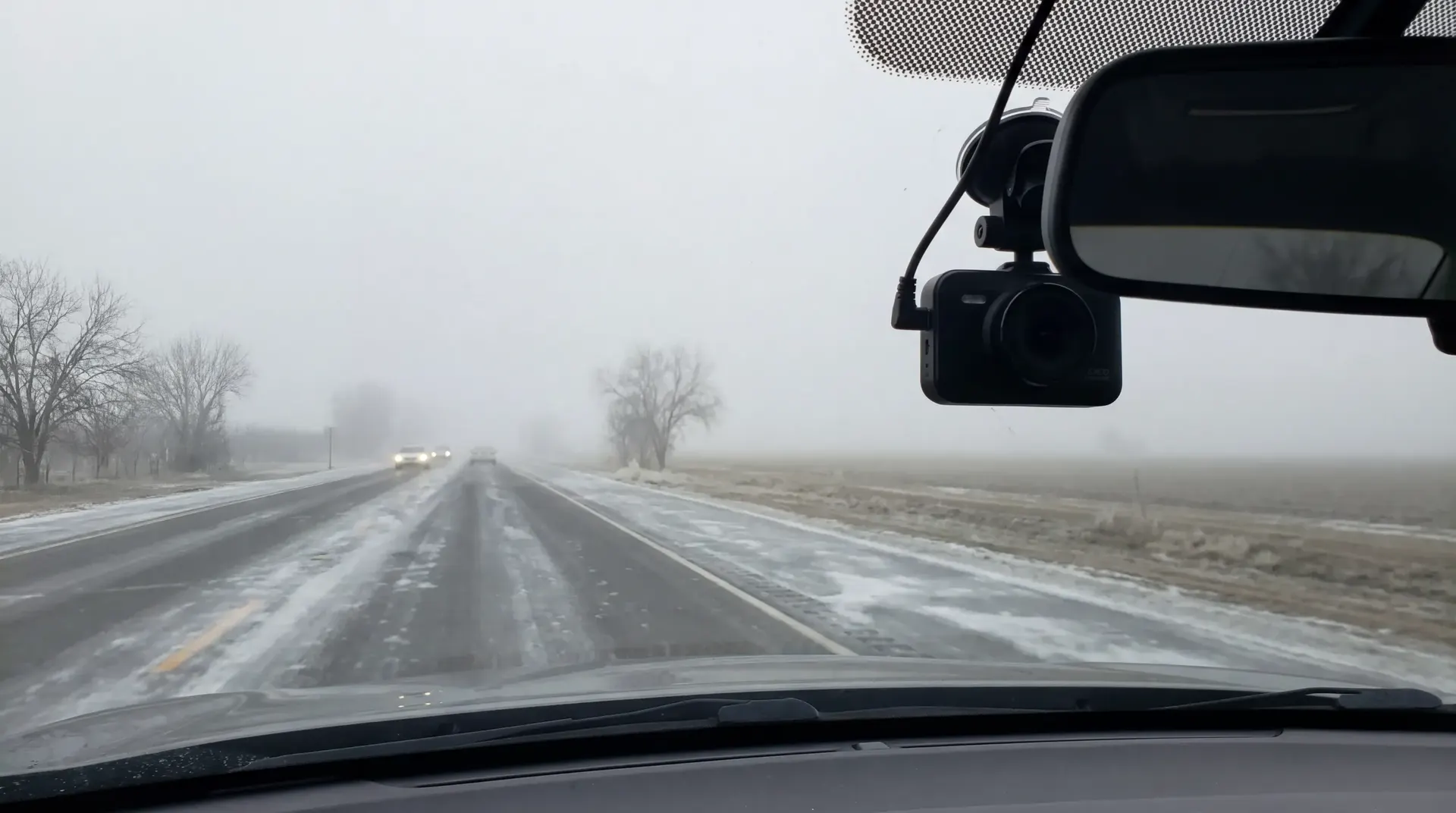
Why a Dashcam Is Your Best Witness in a Central Valley Winter Accident
Winter in the Central Valley brings a unique set of driving challenges.

Quick answer: Under California law - specifically CCP § 335.1 - most personal injury claims have a two-year deadline from the date of injury (one year for medical malpractice, which we do not handle). Acting quickly preserves evidence, witness memories, and your right to recover medical bills, lost income, and pain and suffering. Devoted Injury Lawyers is a contingency-fee firm - you pay no fee unless we win.
Winter in the Central Valley brings a unique set of driving challenges. While we may not see the heavy snow of the mountains, the season still delivers dense Tule fog, slick rain-soaked roads, and surprisingly icy patches, especially during cold mornings. These conditions can turn a routine commute into a high-risk journey, where accidents happen in the blink of an eye. When they do, determining who was at fault can become a complicated and contentious process.
In these situations, a small, unassuming device mounted on your windshield can become your most powerful ally: a dashcam. This technology provides an unbiased, minute-by-minute account of events leading up to a collision. For drivers navigating the unpredictable winter roads of the Central Valley, from Stockton to Bakersfield, a dashcam isn't just a gadget-it's essential protection.
This article will explore why dashcams are critically important for proving fault in winter accidents, how the footage can strengthen your personal injury claim, and what you should look for when choosing a device.
The Challenge of Proving Fault in Winter Weather
Winter conditions add layers of complexity to any car accident investigation. A driver who rear-ends another vehicle might claim they slid on an unseen patch of ice. In a multi-car pile-up caused by low visibility from fog, accounts from drivers and witnesses can be contradictory and confusing.
Without objective evidence, insurance companies may try to assign partial blame or deny a claim altogether. They might argue that you were driving too fast for the conditions, even if you were being cautious. This is where dashcam footage cuts through the confusion.
How Dashcam Footage Creates a Clear Narrative
A dashcam records what actually happened, removing doubt and reliance on conflicting memories. Here’s how the footage provides undeniable proof:
- Captures the At-Fault Driver's Actions: Did another driver run a red light obscured by fog? Were they texting, speeding, or tailgating on a wet highway? A dashcam documents these negligent behaviors, making it difficult for the other party to dispute their role in the crash.
- Demonstrates Your Safe Driving: The footage can show that you were obeying traffic laws, maintaining a safe following distance, and adjusting your speed for the hazardous conditions. This is crucial for countering any claims of shared fault.
- Records the Road and Weather Conditions: A video recording can clearly show the presence of ice, heavy rain, or dense fog. This context helps illustrate why an accident occurred and can support your version of events, proving that you were reacting appropriately to the environment.
- Provides an Unbiased Witness: Unlike human memory, which can be flawed or influenced by stress, a dashcam offers a neutral, factual record. It doesn't take sides; it simply shows what happened. This level of objectivity is invaluable when negotiating with insurance adjusters or presenting a case in court.
How long do I have to file a car accident claim in California?
For most California personal injury claims, including this category, the statute of limitations is two years from the date of the injury under CCP § 335.1. Government claims (against a city, county, or state agency) have a much shorter six-month window under Gov. Code § 911.2 - so do not wait to call.
The Legal Power of Dashcam Evidence in a Personal Injury Claim
At Devoted Injury Lawyers, we have seen firsthand how a few seconds of video can largely change the outcome of a personal injury case. When you've been injured in a winter accident, your focus should be on recovery, not fighting with an insurance company. Dashcam footage helps streamline the legal process and strengthens your position.
Supporting Your Claim
When you file a personal injury claim, you and your attorney needs to prove that the other party's negligence caused your injuries. Dashcam footage serves as direct evidence to establish this. It can:
- Establish Liability Quickly: When presented with clear video evidence of their client's fault, insurance companies are more likely to accept liability and offer a fair settlement sooner. This can help you avoid a lengthy and stressful legal battle.
- Maximize Your Compensation: The footage can document the severity of the impact, which correlates to the extent of your injuries and vehicle damage. This helps justify the compensation you seek for medical bills, lost wages, and pain and suffering.
- Refute False Accusations: If the other driver falsely claims you caused the accident, your dashcam footage can immediately disprove their story. It protects you from being wrongfully held responsible for damages and injuries.
Navigating the aftermath of an accident is complex, but having clear evidence simplifies the process. An experienced personal injury attorney can analyze your dashcam footage to build the strongest possible case on your behalf.
Choosing the Right Dashcam for Your Needs
Investing in a dashcam is a small price to pay for significant peace of mind. With many options on the market, it can be hard to know which one is right for you. Here are key features to consider:
- Video Quality: Look for a camera that records in at least 1080p (Full HD) resolution. Higher resolutions, like 1440p or 4K, provide even greater detail, making it easier to read license plates and see distant events.
- Low-Light Performance: Winter in the Central Valley means darker mornings and earlier evenings. A camera with good night vision or a wide dynamic range (WDR) sensor is essential for capturing clear footage in low-light conditions or dense fog.
- Loop Recording: This standard feature ensures your camera rarely runs out of space. It automatically overwrites the oldest files with new recordings.
- G-Sensor: A G-sensor detects sudden impacts, like a collision. When triggered, it automatically saves and locks the current video file, preventing it from being overwritten.
- GPS Logging: A built-in GPS module records your vehicle’s speed and location. This data can be crucial for proving you were driving at a safe speed and pinpointing the exact location of the accident.
- Parking Mode: Some dashcams can monitor your vehicle even when it's parked. If the G-sensor detects a hit-and-run, the camera will wake up and record the incident.
What to Do with Your Footage After an Accident
If you are involved in an accident and have a dashcam, the steps you take next are important.
- Ensure Your Safety: First, check on yourself and your passengers. If anyone is injured, call 911 immediately.
- Do Not Delete Anything: Preserve the footage. Even if you think a clip is irrelevant, it may contain important contextual information.
- Share with Law Enforcement: Inform the responding police officer that you have dashcam footage of the incident. They may want to view it on-site or request a copy for their report.
- Do Not Post on Social Media: Rarely post accident footage online. It could be used against you by the other party's insurance company or legal team.
- Consult a Personal Injury Attorney: Before you speak with any insurance adjusters, contact an experienced attorney. Your lawyer can review the footage and advise you on the best way to use it to protect your rights and support your claim.
Protect Yourself on Central Valley Roads This Winter
The slick, foggy, and sometimes icy roads of the Central Valley demand extra caution during the winter months. While safe driving is your first line of defense, a dashcam is your best backup. It provides the irrefutable evidence you need to prove fault and secure the compensation you deserve if you are injured in an accident caused by someone else's negligence.
If you or a loved one has been injured in a winter car accident, the team at Devoted Injury Lawyers is here to help. We understand the unique challenges of these cases and know how to use evidence like dashcam footage to build a successful claim. Contact us today for a free, no-obligation consultation to discuss your case.
What should I do today?
Take three steps right now: (1) get any needed medical care and follow through with each visit, (2) photograph injuries, vehicles, scene, and any property damage before it changes, and (3) call us before talking to the at-fault insurer. Call (888) 760-2LAW for a free, no-pressure consultation, or visit our contact page to send the details. We answer 24/7, work on contingency, and will tell you straight whether you might have a case. Past results do not guarantee a similar outcome.
Disclaimer: The information provided on DevotedInjuryLawyers.com is for general informational purposes only and does not constitute legal advice.
Jeff Yates, Esq.
CA Bar #332659 · Admitted 2021 · PI since 2011
Jeff is the founding partner of Devoted Injury Lawyers. He has worked in California personal injury since 2011 and holds a Justia 10.0 rating. He is the default legal reviewer for Devoted blog content.
Read Jeff's full bio →One call.
One team.
One less thing
to worry about.
Get a fast case evaluation. Free 24/7 consultation. No fee unless we win. Hablamos Español.