

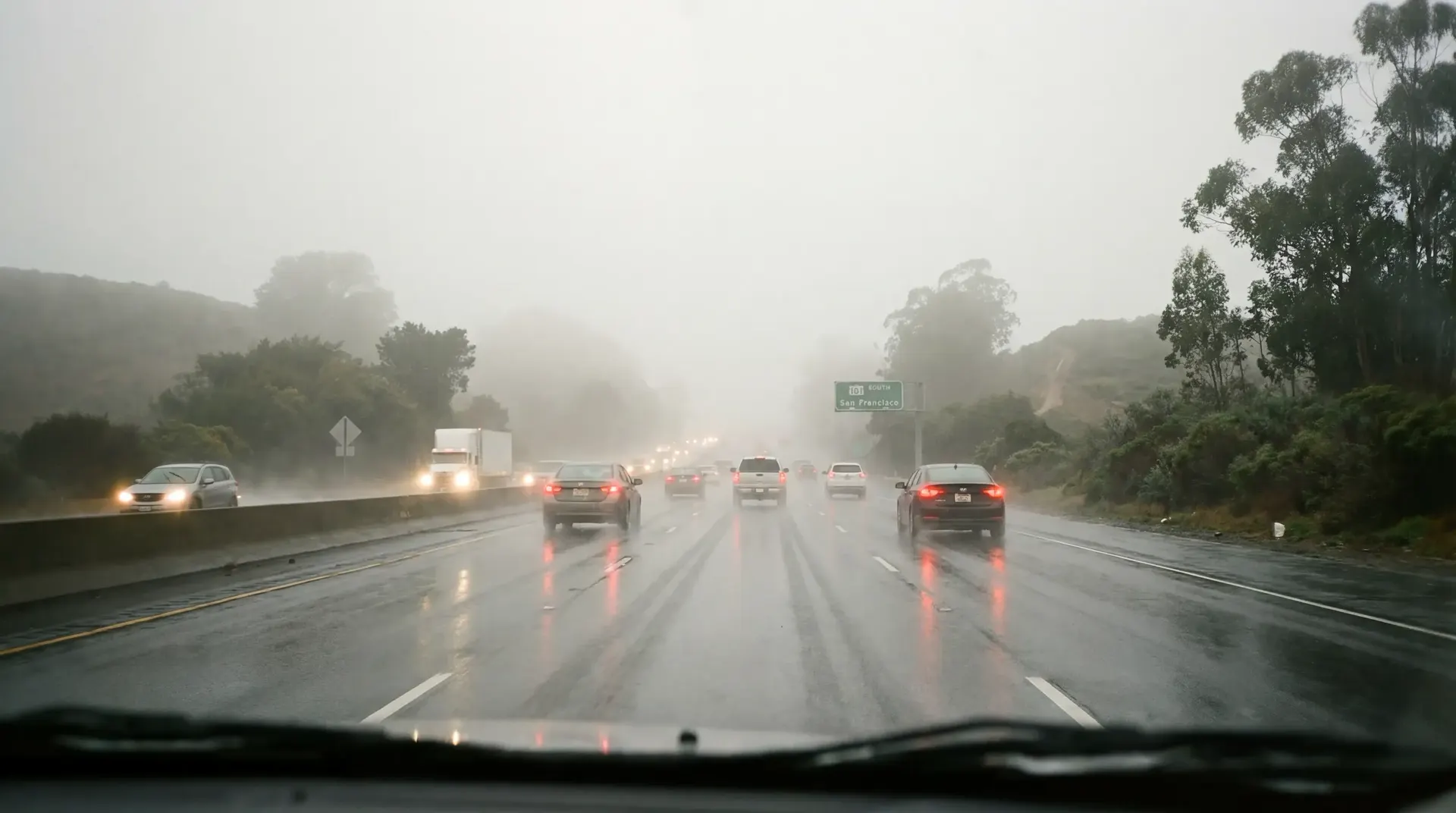
Bay Area Winter Fog: Navigating the Most Dangerous Driving Season
San Francisco and the surrounding Bay Area are famous for fog. We see it rolling over the Golden Gate Bridge in summer postcards, looking majestic and iconic.

San Francisco and the surrounding Bay Area are famous for fog. We see it rolling over the Golden Gate Bridge in summer postcards, looking majestic and iconic. But for locals, especially during the winter months, fog isn't just a scenic backdrop, it is a serious hazard. Tule fog, the thick ground fog that settles in the Central Valley and creeps into the Bay Area during winter, creates some of the most treacherous driving conditions in California.
When visibility drops to near zero, even the most experienced drivers can find themselves in a dangerous situation. At Devoted Injury Lawyers, we have seen firsthand how quickly a routine commute can turn into a life-altering event due to reduced visibility. Understanding the specific risks of winter fog and knowing how to protect yourself is crucial for many people sharing our roads.
The Science of Tule Fog and Why It’s Dangerous
The Bay Area's unique geography creates a perfect recipe for dense fog. During the winter, specifically from November to March, the ground cools rapidly at night. When this cold air gets trapped under a layer of warm air, a phenomenon known as temperature inversion, it condenses moisture into thick clouds that sit right on the ground. This is Tule fog.
Unlike the high, breezy summer fog (Karl the Fog), Tule fog is heavy, stagnant, and incredibly dense. Visibility can drop to less than 200 feet, and in severe cases, less than 10 feet. According to the National Weather Service, Tule fog is a leading cause of weather-related accidents in California, often resulting in multi-car pileups because drivers simply may not see stopped traffic ahead until it is too late.
Why Winter Fog is Different
- Density: It is much thicker than coastal mist.
- Suddenness: Patches of fog can appear instantly, blinding drivers who were in clear air seconds before.
- Wet Roads: The moisture from the fog makes asphalt slick, increasing stopping distances just when you need to stop the fastest.
How long do I have to file a car accident claim in California?
For most California personal injury claims, including this category, the statute of limitations is two years from the date of the injury under CCP § 335.1. Government claims (against a city, county, or state agency) have a much shorter six-month window under Gov. Code § 911.2 - so do not wait to call.
Common Fog-Related Accidents in the Bay Area
Accidents in foggy conditions tend to be more severe than accidents in clear weather. The primary reason is the lack of reaction time. When you are driving at highway speeds on I-80 or traversing the winding roads of the East Bay hills, losing visibility means you are effectively driving blind.
We frequently handle cases involving:
- Rear-End Collisions: This is the most common fog-related accident. A driver slows down due to poor visibility, but the driver behind them continues at speed, slamming into the rear of the first vehicle.
- Multi-Vehicle Pileups: These tragic events occur when one initial collision causes a blockage that incoming traffic may not see. The chain reaction can involve dozens of cars and semi-trucks.
- Run-Off-Road Accidents: On winding roads like Highway 17 or Skyline Boulevard, disorientation caused by fog can lead drivers to drift out of their lanes and off the roadway largely.
Data from the Federal Highway Administration indicates that over 38,700 vehicle crashes occur annually in fog in the U.S., resulting in over 600 fatalities. The unpredictability of Bay Area microclimates means you might leave sunny San Jose and hit a wall of white near Fremont.
Critical Safety Tips for Driving in Fog
Your safety is our priority. While the best advice is usually to avoid driving in severe fog if possible, we know that isn't usually an option. If you need to drive during a Tule fog event, follow these guidelines to keep yourself and others safe.
1. Light It Up Correctly
Turn on your headlights, but keep them on low beam. High beams reflect light off the water droplets in the fog, creating a "white wall" effect that actually worsens visibility. If your vehicle has front fog lights, use them. They are positioned low to the ground and cut through the fog better than standard headlights.
2. Increase Your Following Distance
The "three-second rule" is not enough in fog. You need to extend the distance between you and the car ahead to at least five or six seconds. This gives you the extra time needed to react if the car in front slams on its brakes or hits an obstacle.
3. Rely on Road Lines
Do not focus on the taillights of the car ahead of you. If they drift off the road, you might follow them. Instead, keep your eyes on the white line on the right side of the road (the fog line) or the yellow lane dividers to ensure you stay in your lane.
4. Reduce Your Speed
This seems obvious, but it is the most ignored rule. Speed limits are set for ideal conditions. In dense fog, the safe speed might be 25 mph on a highway. Ignore the pressure from other drivers who might be speeding; drive at a speed that allows you to stop within your visible range.
5. Listen to Your Surroundings
Roll down your window slightly. At intersections or in extremely dense fog, you might hear approaching traffic before you see it. This can be particularly helpful in avoiding cross-traffic collisions.
Legal Liability in Fog Accidents: Who is at Fault?
A common misconception is that weather is an "Act of God" that absolves drivers of liability. This is rarely true in personal injury law. Drivers have a legal duty to exercise "reasonable care" under the current conditions.
If a driver is traveling at the posted speed limit of 65 mph, but visibility is typically 50 feet, they are likely driving negligently. They are driving too fast for conditions (California Vehicle Code 22350). If that driver causes an accident, they can be held liable for damages, regardless of the fog.
At Devoted Injury Lawyers, we investigate these nuances deeply. We look for:
- Black Box Data: Did the other driver brake in time? What was their speed?
- Distracted Driving: Was the driver on their phone while navigating hazardous conditions?
- Vehicle Maintenance: Were their headlights or brakes functioning properly?
Proving negligence in weather-related accidents requires skill and resources. Insurance companies often try to blame the fog to minimize payouts. We fight to prove that the accident was caused by a driver's failure to adapt to the fog, not by the fog itself.
What to Do If You Are Injured
If you are involved in a crash during foggy conditions, the scene can be chaotic and dangerous.
- Stay Inside if Safe: If you are on a highway and may not move your car off the road, it is often safer to stay buckled in your vehicle than to stand on the road where visibility is low.
- Move to Safety: If your car is drivable, get largely off the roadway and turn off your lights so others don't follow you off the road.
- Seek Medical Attention: Adrenaline can mask injuries. Get checked out immediately.
- Contact an Attorney: Before speaking to insurance adjusters who may try to use the weather against you, consult with a legal professional.
We Are Here to Help
Winter driving in the Bay Area demands respect and caution. The fog is beautiful to look at from a distance, but it demands your full attention when you are in the middle of it.
If you or a loved one has been injured in an accident involving foggy conditions, you don't have to navigate the aftermath alone. The team at Devoted Injury Lawyers understands the complexities of these specific cases. We are committed to securing the compensation you need for medical bills, lost wages, and recovery.
Stay safe on the roads this winter.
What should I do today?
Take three steps right now: (1) get any needed medical care and follow through with each visit, (2) photograph injuries, vehicles, scene, and any property damage before it changes, and (3) call us before talking to the at-fault insurer. Call (888) 760-2LAW for a free, no-pressure consultation, or visit our contact page to send the details. We answer 24/7, work on contingency, and will tell you straight whether you might have a case. Past results do not guarantee a similar outcome.
Disclaimer: The information provided on DevotedInjuryLawyers.com is for general informational purposes only and does not constitute legal advice.
Jeff Yates, Esq.
CA Bar #332659 · Admitted 2021 · PI since 2011
Jeff is the founding partner of Devoted Injury Lawyers. He has worked in California personal injury since 2011 and holds a Justia 10.0 rating. He is the default legal reviewer for Devoted blog content.
Read Jeff's full bio →One call.
One team.
One less thing
to worry about.
Get a fast case evaluation. Free 24/7 consultation. No fee unless we win. Hablamos Español.